Calculate Your Savings


ICD 10 Code For Chronic Pain Syndrome | G89.4 diagnosis code
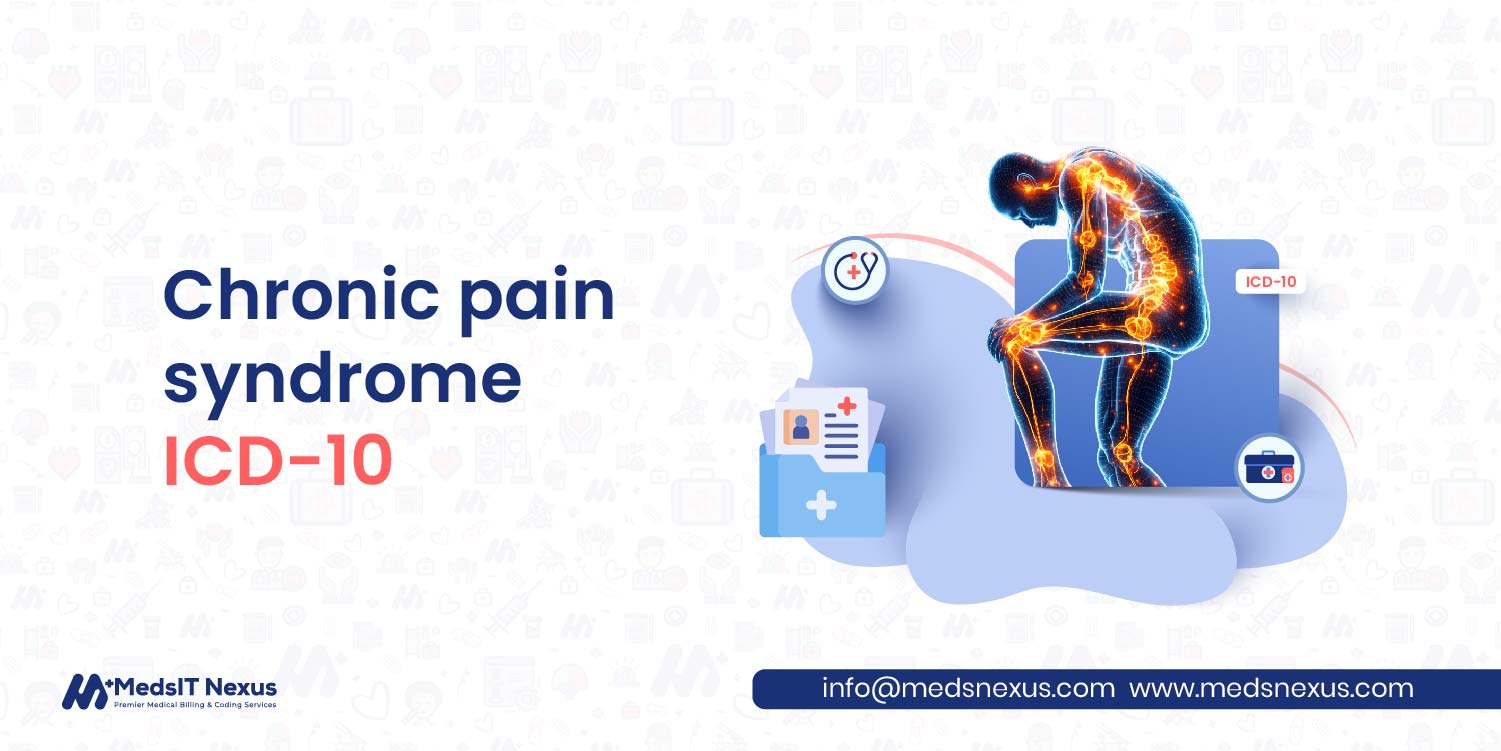
Quick Guide for Chronic pain syndrome icd 10
In the ICD-10-CM classification, chronic pain conditions are listed under category G89, which covers pain related to specific causes, long-term pain conditions, and pain management situations. Therefore, chronic pain syndrome is uniquely coded in this category and is applied when a patient experiences persistent pain affecting daily operations of life.
Additionally, the appropriate code is determined by the provider's clinical records and by the pain being associated with a known condition, trauma, or chronic syndrome.
Primary Code
-
G89.4 Chronic pain syndrome
G89.4 diagnosis code is allocated in cases where a patient suffers from a complex chronic pain disorder whereby the pain is long-lasting and includes psychological or behavioral factors, which affect normal functions.
Related Chronic Pain Codes
- G89.21 → Chronic pain due to trauma
- G89.22 → Chronic post-thoracotomy pain
- G89.28 → Other chronic postprocedural pain
- G89.29 → Other chronic pain
The codes are applied when the chronic pain has a specific cause or clinical origin documented by the medical professional.
Guidelines
-
G89 4 should only be used when the provider of the course identifies chronic pain syndrome as a recognized medical condition and not just mentions long-term pain.
-
If the long-lasting pain is associated with a specific underlying disease or injury, the underlying condition code and the relevant G89 code should be provided.
-
When the visit is mainly for pain management, the relevant G89 code can be listed as the primary diagnosis.
-
If documentation only describes general chronic pain without identifying it as a syndrome, consider using G89.29 (Other chronic pain) instead of the diagnosis code g89.4.
In this regard, patients with long-lasting pain over months or even years are usually recorded as chronic pain syndrome and may have physical or psychological elements. Due to its complexity, proper documentation is critical for correct code induction and proper reimbursement.
In this regard, the specific guide clarifies the ICD-10 codes for chronic pain syndrome, their application, and the key considerations coders should keep in mind when handling chronic pain records.
Essentials of chronic pain syndrome icd-10
Chronic pain syndrome is a complication where one is exposed to indefinitely lasting pain, which continues for months and even several years. Chronic pain persists even after the original injury or illness has improved, unlike short-term pain that resolves after healing. Thus, over time, it may affect physical, emotional, and daily functions.
In human body, the nervous system processes these pain signals, and in chronic pain syndrome, the system may be persistent even in the absence of an active injury. Similarly, several factors can contribute to the development of this condition, including long-term medical issues, nerve damage, past injuries, or psychological stress.
Chronic pain causes:
- Primary Injury or Disease: Pain may begin as a result of trauma, surgery, arthritis, nerve disease, or some other medical disease.
- Persistent Pain Signals: The nervous system keeps sending pain signals to the brain even after the original cause improves.
- Central Nervous System Changes: Over time, the brain and spinal cord become hypersensitive to the pain signals.
- Functional Impact: The sustained pain may disrupt sleep, movement, mood, and daily functions.
Consequently, it is relevant to learn more about this process when linking the Chronic Pain Syndrome ICD-10 code. As proper coding requires the clarity of the information that the provider writes on the nature and cause of the pain.
If the provider specifically diagnoses chronic pain syndrome, the appropriate code G89.4 should be reported. However, if the documentation identifies an underlying condition, such as injury or nerve disorder, as the primary cause of the pain, then the underlying condition is coded first, followed by the relevant chronic pain code.
How does chronic pain syndrome icd 10 Affect Billing Decisions?
Medical billing must be accurate when dealing with chronic pain conditions. Through proper coding, the coders must review the documentation done by the provider to know whether the pain is related to an underlying problem or the pain is described as a chronic pain condition.
This information is directly related to the code to be included as the key diagnosis based on the ICD-10. The common documentation cases and recommendations on coding are listed below.
Continuous Posttraumatic Pain
Pain may extend in some cases after a traumatic experience. This is because the injury itself is usually the main diagnosis in such cases. In case the patient is still experiencing pain connected to the trauma, another chronic pain code is to be recorded.
Example code:
-
Primary code → Injury or trauma diagnosis
-
Additional code: G89.21 → Chronic pain due to trauma
Persistent Pain Following Surgery
Postprocedural chronic pain is defined as a pain that is persistent after surgery. After a provider identifies this condition, coders are able to give the correct chronic pain code along with the code of the surgical condition or complication.
Example code:
-
Primary code → Surgical condition or postoperative diagnosis
-
Additional code: G89.28 → Other chronic postprocedural pain
Diagnosed Chronic Pain Syndrome
When a physician has a clear diagnosis of chronic pain syndrome, then the case is not addressed as a symptom, but rather as a medical condition. The syndrome code may be the main diagnosis in such cases, especially when the center of appointment focuses on pain management.
Example code:
-
g89 4 diagnosis code → Chronic pain syndrome
icd 10 code for chronic pain syndrome unspecified
There are cases in which the provider records persistent pain but fails to specify a specific cause, as well as establish chronic pain syndrome. Once this happens, coders will use the general code of chronic pain, depending on the available details.
Example code:
-
G89.29 → Other chronic pain
Key Coding Reminder
To ensure accurate billing and reduce the risk of claim rejections, coders generally follow two simple rules:
-
Documented cause present: First report of underlying condition.
-
Pain management is the primary reason for the visit: A chronic pain code from the G89 category may be used as the main diagnosis.
Thus, applying these principles helps maintain proper documentation standards, supports medical necessity, and improves the success rate of insurance claims.
Why Claims Get Denied!
Claims for icd 10 code for chronic pain syndrome can be tricky. Denials often happen because of documentation gaps, wrong code choices, or improper sequencing of diagnoses. Thus, understanding the common issue can help you avoid rejected claims.
General or Unspecified Codes
Most of the coders revert to R52 (Pain, unspecified) or diagnosis code g89 4 (Chronic pain syndrome) without examining whether the record refers to a more specific form of pain. The insurers are usually seeking a definite correlation to the location, cause, or type of chronic pain. It may be fired by using an ambiguous code can trigger a denial for lack of specificity.
Incorrect Coding Sequence
Chronic pain is a symptom that is normally caused by an underlying condition, which includes arthritis, neuropathy, or fibromyalgia. Claim denials can result in a situation where chronic pain is submitted not as the root cause but as the primary diagnosis.
Solution → code the primary disease first, then add chronic pain syndrome as a secondary diagnosis when relevant.
Documentation Shortcomings
Payers require clear proof that chronic pain exists and affects the patient’s daily life. Documentation should include:
-
Duration and onset of pain
-
Severity and frequency
-
Impact on daily activities
-
Relevant clinical tests or imaging
In the absence of this, even rightly coded claims may be rejected.
Failure to comprehend the ICD-10 Hierarchy
Some coders confuse general pain codes with chronic pain syndrome codes. G89.4 is specific to chronic pain syndrome, whereas R52 is for general pain. Using the wrong code can result in denials or delayed payments.
Tips for Coding Chronic pain syndrome icd 10

Proper coding of chronic pain syndrome requires careful review based on the clinical documentation and strict compliance with ICD-10-CM. The use of a structured approach will guarantee adherence, enhance the accuracy of coding, and reduce the risk of claim denials.
Here are the essential best practices coders should follow:
- Code the underlying cause first
When chronic pain symptoms are linked to a specific condition, injury, or procedure, report the primary cause before assigning a chronic pain code. -
Select the most specific code available
Use codes like G89.21, G89.28, or G89.4 based on the documented type and source of the chronic pain. -
Use general codes only when necessary
If the provider documents persistent pain without specifying a syndrome or underlying cause, G89.29 (Other chronic pain) may be appropriate. -
Combine codes appropriately
When chronic pain is secondary to another condition or post-procedure, assign both the underlying condition code and the relevant chronic pain code as applicable. -
Confirm focus of care
Determine if the visit is primarily for pain management or assessment of the underlying condition to decide which code should be listed as primary.
Following these best practices of coding assists in accurate medical record keeping, aids in medical necessity, and provides better reimbursement procedures.
How MedsIT Nexus Supports Accurate icd 10 chronic pain syndrome!
At MedsIT Nexus, chronic pain diagnosis is handled with a strong emphasis on clinical precision and compliance with ICD-10-CM guidelines. Furthermore, certified coders thoroughly review provider documentation to ensure the correct coding based on the nature, cause, and focus of the pain. Proper sequencing is applied when chronic pain is linked to an underlying condition or procedure.
FAQs
What is the correct icd 10 for chronic pain syndrome?
G89.4 – Chronic pain syndrome. This code is used when the provider specifically diagnoses chronic pain syndrome as a persistent pain condition affecting daily functioning of life.
Can chronic pain be coded as the primary diagnosis?
Yes, chronic pain can be listed as the primary diagnosis if the visit is primarily for pain management or if no specific underlying cause is documented.
What is the difference between G89.4 and G89.29?
G89.4 is used when chronic pain syndrome is specifically diagnosed and documented. While
G89.29 is applied when persistent pain is noted, but a specific syndrome or cause is not identified in the medical record.
What code should be used for post-surgical chronic pain?
For pain that continues after a surgical procedure, G89.28 – Other chronic postprocedural pain is typically used. The code for the surgical condition should also be reported based on documentation.
What documentation supports accurate chronic pain coding?
Detailed records are essential for precise coding. Documentation should include Onset and duration of pain, Pain severity and impact on daily activities, Associated symptoms, and relationship to underlying conditions or procedures.
Table of Contents

Services
- Medical Audit Services
- Medical Billing Services
- Medical Credentialing Services
- Medical Coding Services
- Accounts Receivable Management
- Medical Insurance Verification
- Denial Menagement Services
Who we serve
- Private Practices
- Small Practices
- Hospitals & Healthcare
- Physicians
- Medical Equipment
- Outpatient Facilities
Get in Touch
Let's start talking about getting you credentialed