Calculate Your Savings


ICD 10 Code for Nausea and Vomiting: R11.2 and Related Code Guides
Quick guide for ICD-10 Code for Nausea and Vomiting
When choosing an appropriate ICD 10 code for nausea and vomiting, accuracy is essential to enhance reimbursement and reduce claim denials. The commonly used nausea and vomiting ICD 10 code is R11.2, while nausea ICD 10 is reported as R11.0, and vomiting ICD 10 may fall under R11.10 or other specific R11 subcategories.
Moreover, many providers search for ICD 10 nausea and vomiting, ICD 10 nausea, or the correct ICD 10 code for nausea to ensure compliant documentation. Choosing the right ICD 10 nausea and vomiting code depends entirely on clinical details, symptom specificity, and whether an underlying condition has been identified.
The ICD-10-CM places vomiting under the R00-R99 category, which is used to discuss the symptoms and signs that cannot be found in other categories. The usage of the code depends on the clinical details documented in the patient record.
Primary Codes
- R11.10 – Vomiting, unspecified
- R11.11 – Vomiting without nausea
- R11.12 – Projectile vomiting
- R11.13 – Vomiting of fecal matter
- R11.14 – Bilious vomiting
- R11.15 – Cyclical vomiting syndrome (non-migraine)
- R11.16 – Cannabis hyperemesis syndrome
- R11.2 – Nausea with vomiting, unspecified
Coding guidelines for vomiting
- Use R11.2 in case nausea follows vomiting. Otherwise, R11.10 or another specific vomiting code will usually be suitable when nausea is not mentioned.
- Hematemesis (vomiting blood) is not coded in the R11 category. It is instead classified as Hematemesis and code K92.0.
- When using clinical documentation, always select the most relevant code to ensure correct coding and reporting.
Additionally, among the commonly recorded symptoms are vomiting and nausea (notably recorded in the clinical record). Although they might look simple, assigning the appropriate diagnosis code requires attention and care.
In the ICD-10-CM system, nausea and vomiting icd 10 are classified under Chapter 18, which covers symptoms, signs, and abnormal clinical findings rather than confirmed diseases. Because these codes represent symptoms, they are usually scrutinized by payers when they are evaluating claims.
This guide categorizes R11 codes of nausea and vomiting and further describes the situations in which each code is applicable and the fundamental coding takeaways of nausea and vomiting.
Mechanism of Vomiting
Vomiting is the expulsion of the stomach contents by the body forcefully through the mouth. This response is regulated by one center in the brain, which reacts quickly whenever the body perceives something that is harmful or painful. Some of the common triggers are infections, food poisoning, severe pain, some medications, and pregnancy.
In cases of vomiting, the body typically follows a coordinated sequence:
-
A Trigger Occurs: The body identifies irritation, toxins, or some other stimulus.
-
The Brain Responds: Signals are transmitted by the brain to initiate the vomiting reflex.
-
Muscles Contract: The abdominal and diaphragm muscles contract.
-
Stomach Contents Rise: Pressure causes the movement of stomach contents upwards.
-
Vomiting occurs: The body expels the stomach contents.
These details are important in terms of coding icd 10 code for nausea and vomiting. When the symptoms are a result of a clear underlying condition, e.g., infection or a reaction to a medication, then the underlying condition should be coded first.
When no specific cause is documented, then nausea and vomiting can be reported with the help of the symptom codes belonging to the R11 category.
The codes can be found in the sub-chapter of symptoms, signs, and abnormal clinical findings, which cannot be classified in any other way, i.e., they are reported rather than confirmed diseases.
Impact Of Nausea With Vomiting ICD 10 On Medical billing
Medical coding is a process wherein decisions are informed by clinical documentation as opposed to normal habits. Once a provider has detected an underlying condition, then code the underlying condition first. Although vomiting in such situations is reported as secondary rather than primary.
Practical examples make this easier to understand:
1. Gastroenteritis with vomiting
The underlying cause is gastroenteritis, so code vomiting-gastroenteritis.
2. Medication reaction with nausea and vomiting
Report the adverse drug reaction before the symptom codes.
3. Pregnancy-related vomiting
Pregnancy-specific codes of nausea and vomiting should be used in place of general symptom codes R11.
Nonetheless, there are numerous situations when the provider records nausea or vomiting without a specific reason. When that happens, coders are required to choose the best symptom code under the ICD-10-CM category of R11 according to the appropriate degree of medical record detail.
The key rule is simple:
- In case a cause is recorded, code the cause first.
- In case no reason is recorded, then the symptom code serves as the first diagnosis.
Using this approach helps in maintaining quality reporting, further allows medical necessity, and decreases the chances of claims denials in the billing process.
- a code that is different than projectile vomiting.
- There is also a specific classification of bilious vomiting.
Clinical context equally matters. The providers are to mention any symptomatic associations that can be indicative of the underlying cause. What is the ICD-10 code for nausea and vomiting?
Accuracy in the medical record determines the choice of icd 10 nausea and vomiting codes. The more detailed the documentation is, the more accurate the choice of the codes will be to assist in justifying the correct claims and easier reimbursement.
Nausea and vomiting are included under the R00-R99 section of the ICD-10-CM system: it describes the symptoms and signs and abnormal clinical or laboratory findings that are not known to be confirmed diseases. The codes related to vomiting fall under the R11 category.
ICD-10-CM Coding for Nausea and Vomiting
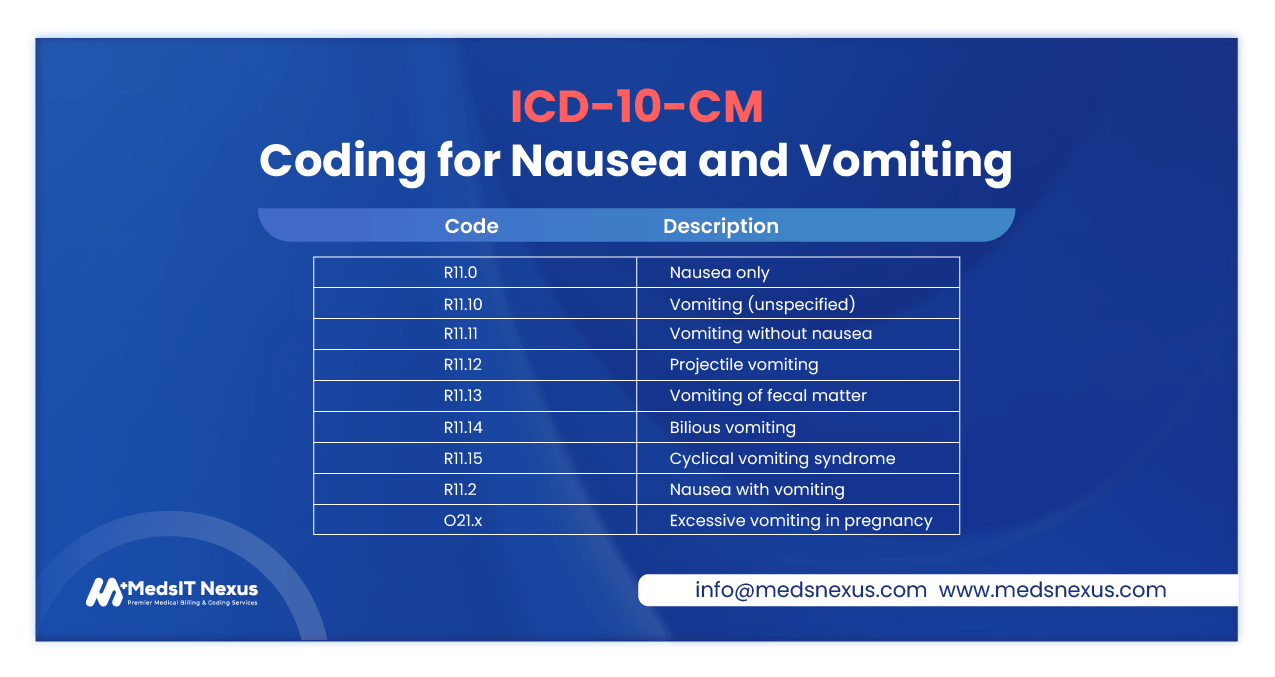
All these codes are symptom-based diagnoses, and thus, a thorough documentation review is vital before they are assigned. Type 2 Excludes notes in the coding guidelines are also to be observed by coders to make sure that related conditions can be reported alongside the proper conditions.
The most specific code with documentation is significant to use in order to improve the accuracy of reporting and avoid claim denials.
Documentation Of Vomiting And Nausea ICD 10
The initial step in the right coding is to have clear and comprehensive clinical documentation. Correct records assist coders in choosing the right ICD-10 code to use when documenting nausea and vomiting, which helps in making the right bill and reduces the chances of claim rejection.
The key details that the providers should record and explain the symptoms of the patient include:
-
Frequency of nausea or vomiting
-
Vomiting on or off with nausea
The type of vomiting is also important because it directly affects code selection. For example:
Unspecified vomiting needs such as:
-
Abdominal pain
-
Fever
-
Diarrhea
-
Headache
Another critical factor is pregnancy status. Cases involving nausea or vomiting during pregnancy are coded using the pregnancy-related codes rather than the standard symptom codes in ICD-10-CM.
ICD 10 Code For Nausea And Vomiting Claim Denied!
The denials of claims based on vomiting codes tend to happen due to the documentational errors, wrong sequencing of codes, or simply due to the inability to follow the official codes. Many of these problems can be avoided with the help of careful examination of the medical record and the correct choice of codes.
Below are some of the most common reasons vomiting-related claims are rejected:
1. Excessive use of unspecified codes
One frequent problem is relying too often on R11.10 (Vomiting, unspecified) when the medical record clearly describes a more specific type of vomiting. Payers may deny the claim for lack of specificity when an unspecified code is submitted.
2. Incorrect sequencing of symptom codes
Vomiting is not typically added as the chief diagnosis when an established condition is identified to be the cause of the symptom. e.g., when the provider first diagnoses gastroenteritis, bowel obstruction, or a medication reaction, the underlying condition must be coded first, followed by the addition of vomiting as a secondary symptom when it is appropriate.
3. Coding mistakes during pregnancy
The other general problem is when coders involve R11 codes of the symptoms rather than the obstetric codes, which are applied to the vomiting during pregnancy. The pregnancy-related nausea and vomiting should be coded according to Chapter 15, in the obstetric part of ICD-10-CM, usually in the range of O21.x.
4. Lack of medical need documentation
Claims may be denied if the record does not clearly describe the patient’s condition. Documentation should include details such as symptom onset, severity, duration, associated symptoms, and the provider’s clinical assessment.
Hence, most vomiting-related denials can be avoided by focusing on clear documentation, proper sequencing, and selecting the most specific diagnosis code available.
Tips for Coding Vomiting ICD-10
The correct ICD-10 code for nausea and vomiting must be achieved by ensuring that clinical documents have been carefully reviewed and follow the correct coding rules. This systematic approach is useful in assuring compliance, enhancing the accuracy of claims, and reducing the chances of payer denial.
Here are the key best practices coders should follow:
-
Code the confirmed diagnosis first
-
Choose the most specific code available
-
Use unspecified codes only when necessary
-
Apply nausea and vomiting combination codes correctly
-
Verify pregnancy status
How MedsIT Nexus Helps Prevent Vomiting ICD-10 Claim Denials
At MedsIT Nexus, vomiting-related coding is reviewed with a strong focus on clinical accuracy and regulatory compliance. Certified coding specialists review provider records with the utmost care, verify the specificity of the symptom, and proper sequencing is done whenever an underlying condition is detected.
Additionally, MedsIT Nexus provides specialized coding audits and revenue cycles to support documentation quality, improve claims accuracy, and safeguard the general performance of revenues.
FAQs
Q.1 What is the correct ICD-10 code for unspecified vomiting?
The appropriate code is R11.10- Vomiting, unspecified. The code is to be applied in instances where the medical record fails to offer information regarding the nature of vomiting or any other symptom connected with the vomiting.
Q.2 Can vomiting be coded as the primary diagnosis?
Vomiting should only be reported as the main diagnosis in case no underlying condition is known to cause the symptom. In case an exclusive diagnosis is made, e.g., gastroenteritis, bowel obstruction, medication reaction, or pregnancy-related case, that diagnosis should be first coded, and vomiting should be reported as secondary.
Q.3 What is the difference between R11.10 and R11.2 in the Nausea vomiting diagnosis code?
R11.10 is used for vomiting without additional detail, while R11.2 is applied when both nausea and vomiting are documented together without further specificity.
Q.4 What is the code for vomiting during pregnancy?
Vomiting related to pregnancy code is Pregnancy vomiting ICD-10 O21, not the general R11 symptom codes. Accurate documentation of trimester, severity, and clinical context is essential.
Q5. What documentation supports accurate Nausea with vomiting ICD-10?
Detailed documentation is critical for precise code assignment. Records should include: Onset and duration of symptoms, frequency of vomiting episodes, type of vomiting (projectile, bilious, cyclical, etc.)
Table of Contents

Services
- Medical Audit Services
- Medical Billing Services
- Medical Credentialing Services
- Medical Coding Services
- Accounts Receivable Management
- Medical Insurance Verification
- Denial Menagement Services
Who we serve
- Private Practices
- Small Practices
- Hospitals & Healthcare
- Physicians
- Medical Equipment
- Outpatient Facilities
Get in Touch
Let's start talking about getting you credentialed