Calculate Your Savings


NSTEMI ICD 10 Code: A Guide for Healthcare Providers
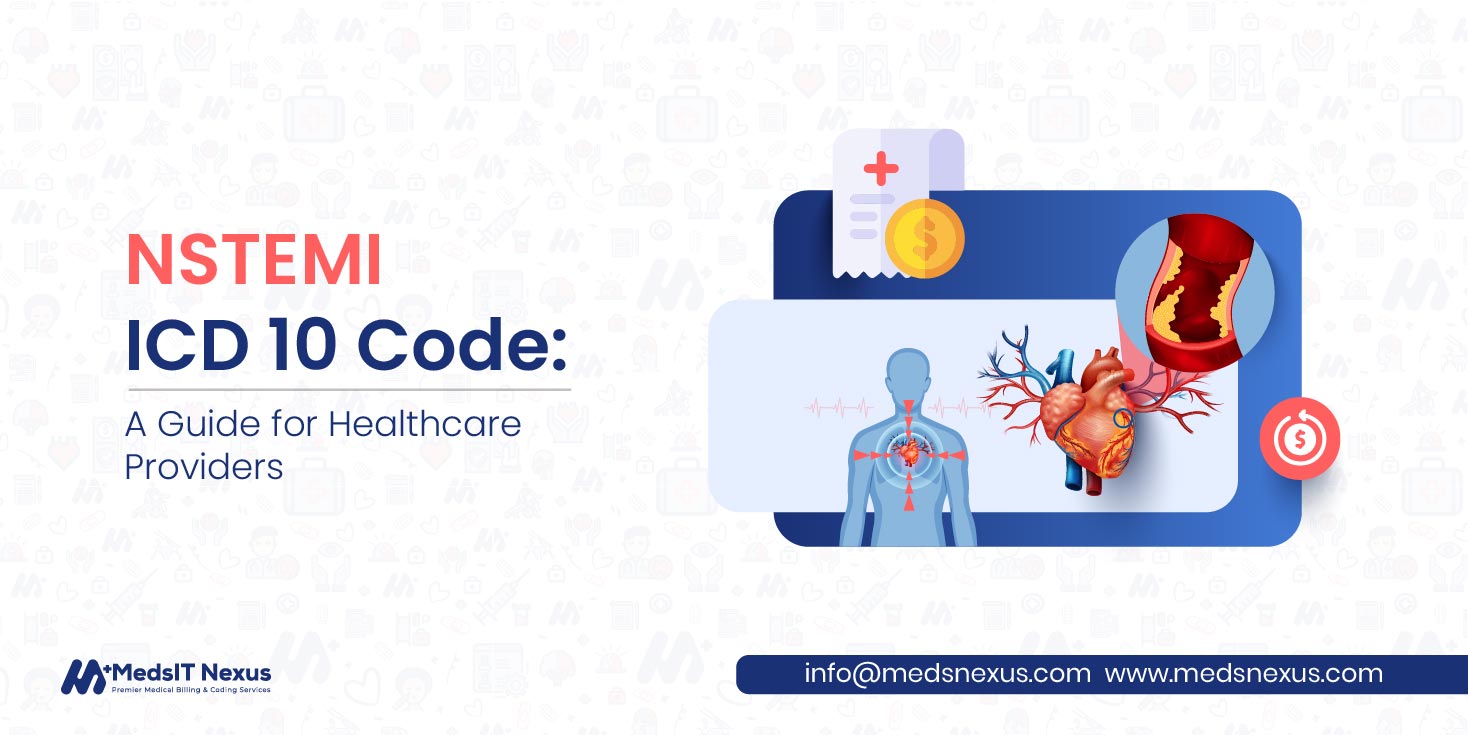
If you are managing a case of NSTEMI, you need to be familiar with the NSTEMI ICD 10 code, which is I21.4. The given diagnosis code, I21.4, plays a crucial role in not only proper documentation but also proper reimbursement. Coding may appear as a difficult task, yet mastering it is crucial to effective patient care and financial performance.
In this particular guide, we will explore the basics of NSTEMI ICD 10 coding, and you will acquire the skills to move through the complexities of diagnosis and reimbursement without any issues.
NSTEMI Coding in ICD-10
Knowing how to code NSTEMI (Non-ST-Elevated Myocardial Infarction) ICD-10 code correctly would help to make sure that healthcare professionals would be able to record cases correctly and get the necessary reimbursement.
ICD-10 NSTEMI (Non-ST-Elevated Myocardial Infarction) code mainly relies on I21.4, yet it may be necessary to include other codes to complete the documentation. It is a process that includes not only coding the initial NSTEMI diagnosis but also taking into account any conditions or subsequent events.
Primary ICD-10 Code for NSTEMI
The major NSTEMI ICD 10 code is I21.4: Non-ST elevation (NSTEMI) myocardial infarction. It is a specific form of myocardial infarction that is characterized by the absence of ST elevation on an ECG, which differentiates it from STEMI (ST-Elevation Myocardial Infarction).
Frequent ICD-10 Codes of NSTEMI
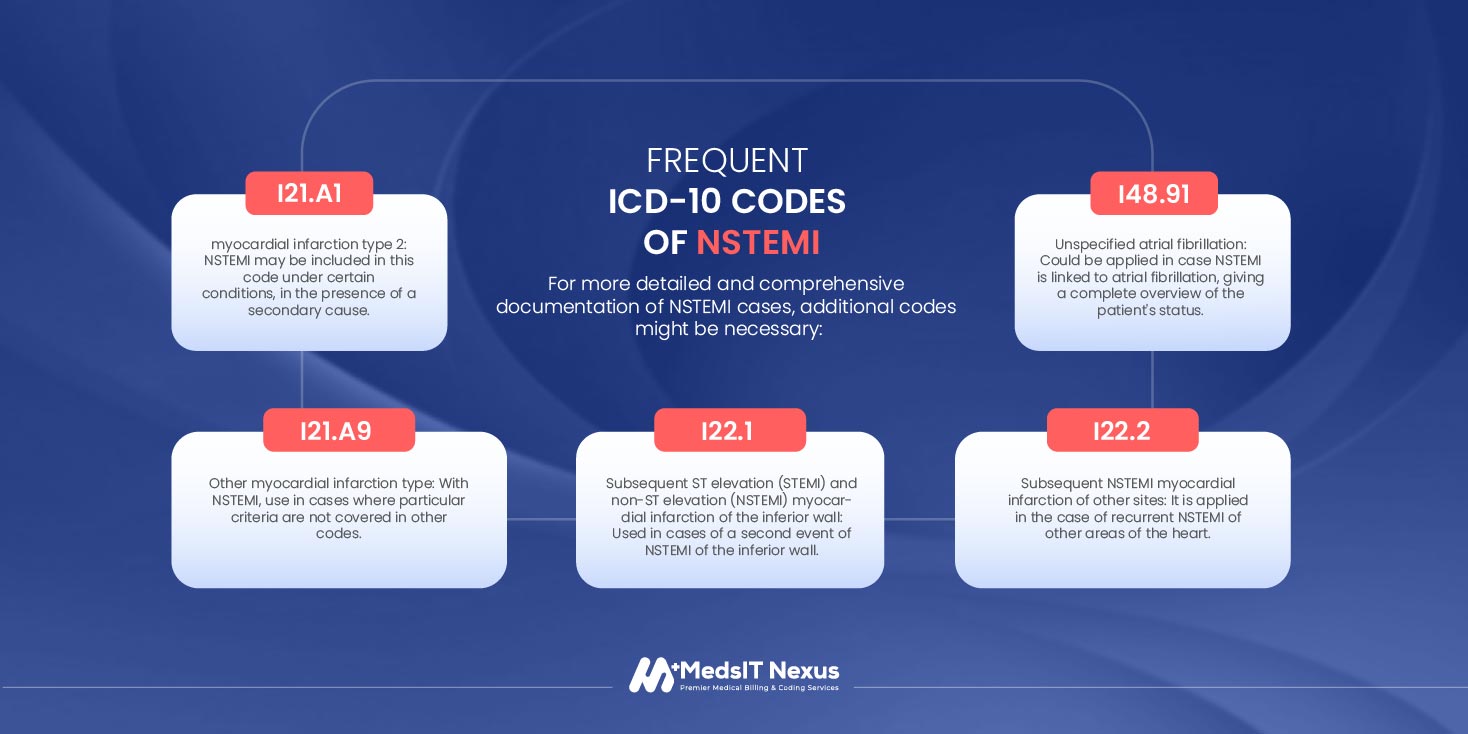
For more detailed and comprehensive documentation of NSTEMI cases, additional codes might be necessary:
-
I21.A1 myocardial infarction type 2: NSTEMI may be included in this code under certain conditions, in the presence of a secondary cause.
-
I21.A9 Other myocardial infarction type: With NSTEMI, use in cases where particular criteria are not covered in other codes.
-
I22.1 - Subsequent ST elevation (STEMI) and non-ST elevation (NSTEMI) myocardial infarction of the inferior wall: Used in cases of a second event of NSTEMI of the inferior wall.
-
I22.2 Subsequent NSTEMI myocardial infarction of other sites: It is applied in the case of recurrent NSTEMI of other areas of the heart.
-
I48.91 – Unspecified atrial fibrillation: Could be applied in case NSTEMI is linked to atrial fibrillation, giving a complete overview of the patient's status.
Non-ST-Elevation Myocardial Infarction (NSTEMI) is a form of heart attack, which involves a partial inhibition of blood flow to the heart muscle, causing tissue damage. In contrast to STEMI, NSTEMI does not cause a significant ST-segment elevation on an electrocardiogram (ECG), which makes it more difficult to diagnose and treat.
Significance of Coding Accurately
Proper coding plays a vital role in healthcare in facilitating effective provider-provider communication, ensuring proper treatment guidelines, and proper payer reimbursement. They are supported by the utilization of standardized coding systems, such as ICD-10.
NSTEMI is caused by rupture of atherosclerotic plaques and formation of a thrombus (blood clot), which partially obstructs the coronary artery. This causes decreased blood flow and oxygen to the myocardium, which causes ischemia. In comparison with STEMI, when full blockage of the artery is realized, NSTEMI normally implies less serious damage to the heart muscle.
Clinical Presentation
NSTEMI patients usually report chest pain or discomfort, which can extend to the arms, back, neck, or jaw. Shortness of breath, nausea, or sweating may also be other symptoms. The risk factors of NSTEMI are older age, history of coronary artery disease, hypertension, diabetes, smoking, and high cholesterol levels.
Diagnosis of NSTEMI
NSTEMI diagnosis is mainly made on the basis of clinical presentation, ECG, and cardiac biomarkers. Although ST-segment changes might not be evidenced by the ECG, high cardiac troponins (proteins released in heart muscle damage) are vital in affirming NSTEMI.
ICD-10 Codes for NSTEMI
6.1. Overview of ICD-10-CM Coding System
The International Classification of Diseases, Tenth Revision, Clinical Modification (ICD-10-CM) is a comprehensive coding system that categorizes diseases, injuries, and health conditions for billing and epidemiological purposes.
6.2. Specific ICD-10 Codes for NSTEMI
For ICD 10 NSTEMI, the relevant code is I21.4 (Non-ST elevation myocardial infarction). This code differentiates NSTEMI from other types of myocardial infarctions, such as STEMI, which is coded as I21.0 (ST elevation myocardial infarction).
Significance of Correct Coding of NSTEMI
7.1. Effect on Patient Care
Proper coding is critical in providing the right care to patients. Misdiagnosis or coding may result in wrong treatment and even negative results.
7.2. Reimbursement Implications
ICD 10 for NSTEMI is used by payers to decide on the amount to be reimbursed for healthcare services. Proper coding is also important to ensure that providers are paid for the services that they provide.
7.3. Quality Reporting and Compliance
Proper documentation and coding are also relevant in quality reporting programs that compare the performance of healthcare providers to particular standards.
Documentation Requirements for NSTEMI
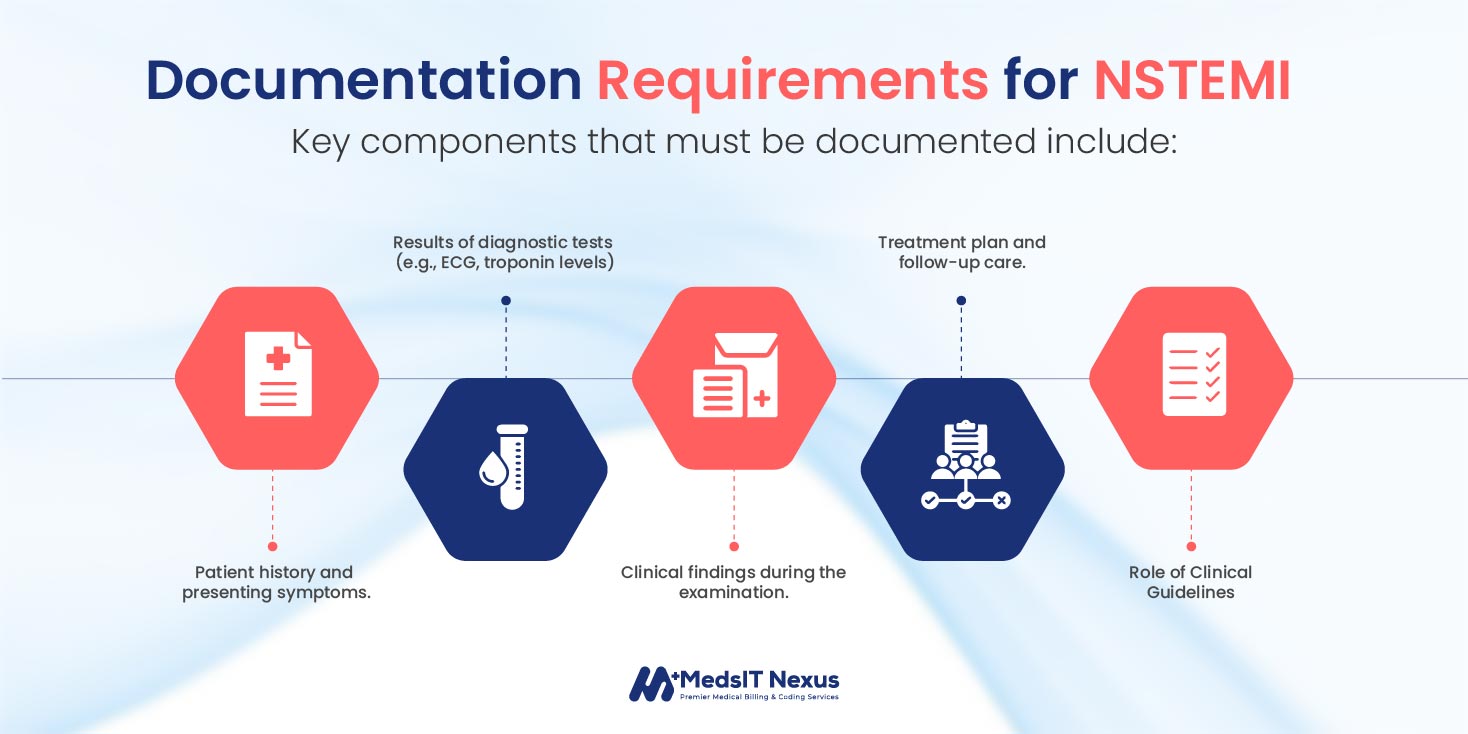
Key components that must be documented include:
-
Patient history and presenting symptoms.
-
Results of diagnostic tests (e.g., ECG, troponin levels).
-
Clinical findings during the examination.
-
Treatment plan and follow-up care.
-
Role of Clinical Guidelines
Adherence to clinical guidelines (e.g., from the American College of Cardiology and the American Heart Association) can enhance the quality of documentation, ensuring that all relevant aspects of the patient’s condition and treatment are recorded.
Common Documentation Mistakes
Common mistakes in documentation may be the absence of specificity in the code (not NSTEMI), the inability to record the reasons why the treatment plan was chosen, and the absence of important diagnostic findings.
Billing Considerations for NSTEMI
10.1. Understanding the Revenue Cycle
The healthcare revenue cycle involves all the administrative and clinical processes that lead to patient service revenue capture, management, and collection. The correct medical coding is an important aspect of this process.
10.2. Payer Guidelines and Reimbursement
Guidelines that have been set by different insurers on billing NSTEMI might be different. Medical professionals need to get acquainted with these standards to guarantee conforming billing.
10.3. Appealing Denied Claims
In case of a rejection of a claim of NSTEMI, the provider must find out the reason for the denial, collect the required documentation, and file an appeal with clear explanations of the services provided.
Clinical Management of NSTEMI
11.1. Treatment Protocols
Management of NSTEMI typically involves medical therapy aimed at restoring blood flow and preventing further damage. This may include:
-
Antiplatelet agents (e.g., aspirin, clopidogrel).
-
Anticoagulation therapy (e.g., heparin).
-
Beta-blockers and ACE inhibitors for heart function and blood pressure control.
Role of Healthcare Providers
A multidisciplinary approach is essential in managing NSTEMI, involving cardiologists, nurses, pharmacists, and dietitians in patient care to optimize outcomes.
Patient Education and Engagement
Engaging patients in their treatment plans is vital. Providers should educate patients about their condition, treatment options, lifestyle changes, and warning signs of complications.
Case Studies
14.1. Case Study 1: Correct Coding in Practice
A 65-year-old man with a history is presenting with chest pains and high troponin levels. He is diagnosed with NSTEMI and properly coded with I21.4 after proper diagnostics. This results in proper treatment and reimbursement.
14.2. Case Study 2: Coding and Billing Problems
A patient is found to have unusual symptoms, and an ECG and troponin test are carried out, and he is diagnosed with NSTEMI. The claim is rejected at first because of incoherent documents. The provider examines the paperwork and files an appeal, which points out the diagnosis and treatment program leading to a successful reimbursement.
14.3 New Changes in ICD 10 code for NSTEMI
With medical knowledge advances, there is a possibility of revising the codes in ICD-10, which is in accordance with changes in the diagnostic criteria or management of NSTEMI.
14.4. Technological Advancements
Coding is one area where technology (including artificial intelligence in electronic health records (EHR)) can help improve accuracy by automating documentation and minimizing human error.
14.5. Training and Education for Healthcare Providers
Constant learning can play an essential role in ensuring that health professionals are updated on any changes related to coding, guideline modifications, and technological developments.
Conslusion
An accurate ICD 10 code NSTEMI is vital for patient management, reimbursement, and compliance with healthcare standards. Providers must ensure thorough documentation and adherence to coding guidelines.
Healthcare providers are encouraged to prioritize accuracy in coding and documentation, recognizing its impact on patient care and the financial health of their practices.
FAQs
1. What is the NSTEMI icd 10 code, and how is it different from STEMI?
NSTEMI is a type of heart attack with partial blockage of blood flow, while STEMI involves complete blockage, leading to more severe damage.
2. What are the main symptoms of NSTEMI?
Symptoms include chest pain, shortness of breath, and sometimes nausea or sweating.
3. Which ICD-10 code is used for NSTEMI?
The ICD-10 code for NSTEMI is I21.4.
4. Why is accurate coding important in NSTEMI cases?
Accurate coding affects patient care, reimbursement, and compliance with healthcare regulations.
5. What documentation is necessary for coding NSTEMI?
Key documentation includes patient history, clinical findings, and results from diagnostic tests.
Table of Contents

Services
- Medical Audit Services
- Medical Billing Services
- Medical Credentialing Services
- Medical Coding Services
- Accounts Receivable Management
- Medical Insurance Verification
- Denial Menagement Services
Who we serve
- Private Practices
- Small Practices
- Hospitals & Healthcare
- Physicians
- Medical Equipment
- Outpatient Facilities
Get in Touch
Let's start talking about getting you credentialed