Calculate Your Savings


Seasonal Allergies ICD 10 Guide: Diagnosis Code J30.2 Explained
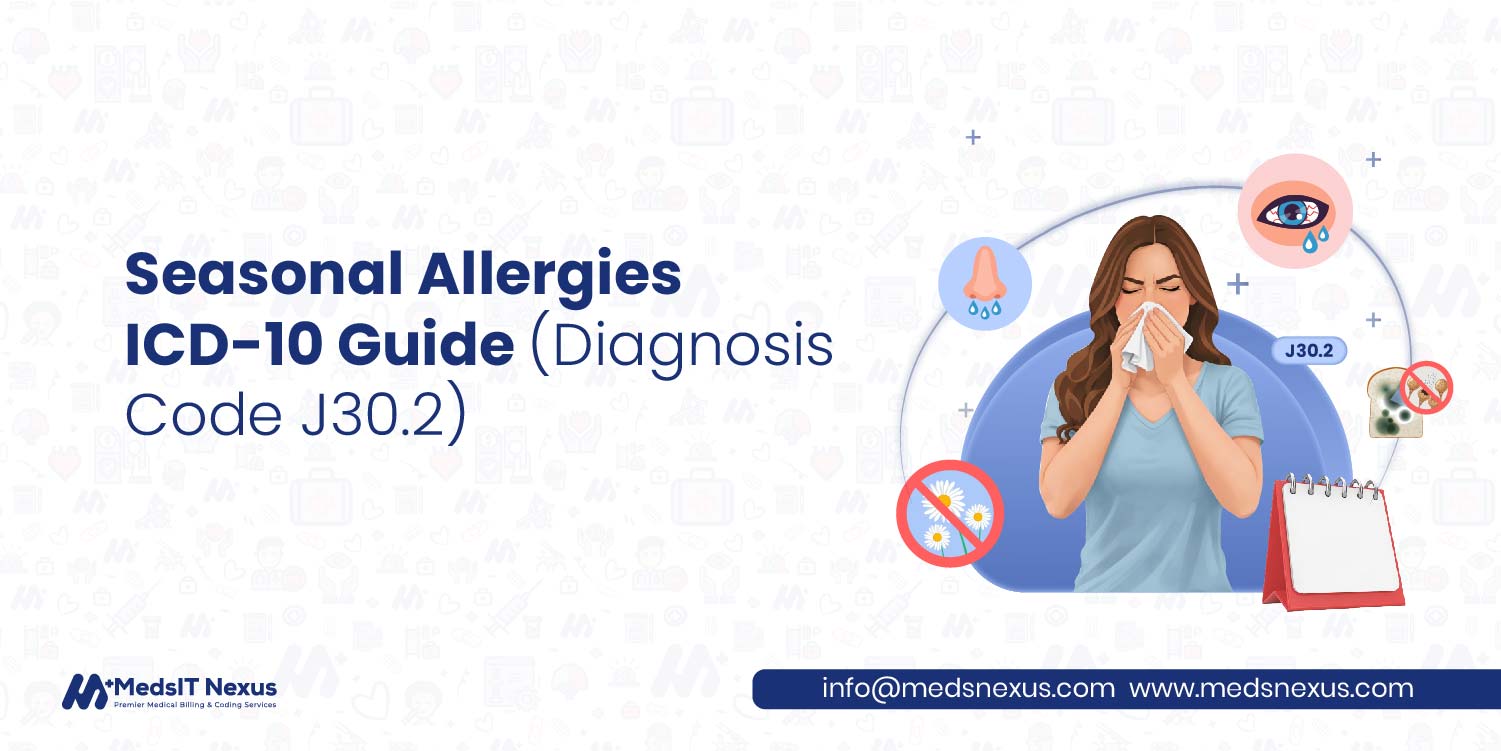
One of the most common reasons why patients keep seeking the help of qualified providers is seasonal allergies.
For these patients, symptoms like sneezing, nasal congestion, and itchy eyes may feel like they’re routine and not that serious, but they still need to be accurately diagnosed, with, of course, proper documentation after the diagnosis.
For many practices, the challenge is not recognizing seasonal allergies. The real issue comes when we’re trying to pick the correct seasonal allergies ICD 10 codes, and then making sure they completely align with the relevant medical notes and payer rules.
This is because a single coding error can delay any payment claims that were made, overall lowering the work quality of already busy offices.
This guide explains Diagnosis Code J30.2 in simple and easy-to-understand terms. It also explains when to use it, when to avoid it, and how to document seasonal allergies, the right way, so that coding decisions feel less complicated.
Understanding Seasonal Allergies in Clinical Practice
Seasonal allergies happen when the immune system begins to overreact to substances in the environment. These substances usually come about during certain times of the year.
The most commonly triggering allergens are known to come from trees, grass, weeds, and spores that come from mold. When a patient of seasonal allergy breathes them in, the body treats them like a threat.
This causes some symptoms to show up, some examples include sneezing, a runny or blocked nose, itchy eyes, watery eyes, and irritation in the throat.
Now that we know these allergens don't cause infections because seasonal allergies don’t have any bacteria or viruses at their core, we can safely get to the conclusion that they are immune responses.
This begins to clear out the fog and allows for accurate use of the seasonal allergy icd 10 system. It further prevents any confusion of seasonal allergies with colds, sinus infections, or chronic respiratory conditions.
Why ICD-10 Codes Matter for Seasonal Allergies
ICD-10 codes are standardized labels that represent diagnoses and are required for insurance billing, medical records, and data reporting. Every payer relies on these codes to understand what condition was treated and why any medical services were provided in the first place.
This is exactly why using the wrong icd 10 seasonal allergies code can lead to denied claims or delayed payments. Not only that, but it can also affect the patient’s records, making it harder for them to manage their healthcare in the future.
According to CMS billing guidelines, diagnosis codes must always fully support the services that are being billed. If, for some reason, they are not in sync, the reimbursement in question is at risk.
Understanding Diagnosis Code J30.2: Made Easy
Diagnosis Code J30.2 is used when a patient has allergic rhinitis caused by seasonal allergens. In simple terms, this is what most people call seasonal allergies or hay fever.
This code applies when:
-
Symptoms are likely to occur during specific times of the year
-
Symptoms are linked to environmental triggers like pollen
-
Symptoms are documented by the provider as allergy-related
Using seasonal allergies icd 10 correctly starts with proper documentation. The provider must clearly state “seasonal allergic rhinitis” or a diagnosis that is equivalent to it in the medical record.
Tip: According to ICD-10-CM coding standards, J30.2 should be used when the seasonal nature of the allergy is clear.
In clinical documentation reviews, this code is often supported by the patient’s history, symptoms, and other findings during a physical checkup of the patient.
Seasonal Allergies ICD 10: Where does J30.2 Fit?
All seasonal allergy diagnoses fall under the ICD-10 category for allergic rhinitis. This category uses codes that start with “J30.” Each code describes a different type of allergy-related nasal inflammation.
Diagnosis Code J30.2 specifically represents seasonal allergic rhinitis. It is one of the most commonly used codes in this category.
Understanding where J30.2 fits helps providers choose the correct icd 10 code for seasonal allergies instead of adhering to unclear or simply wrong choices.
When to Use the ICD 10 Code for Seasonal Allergies (And When Not To)
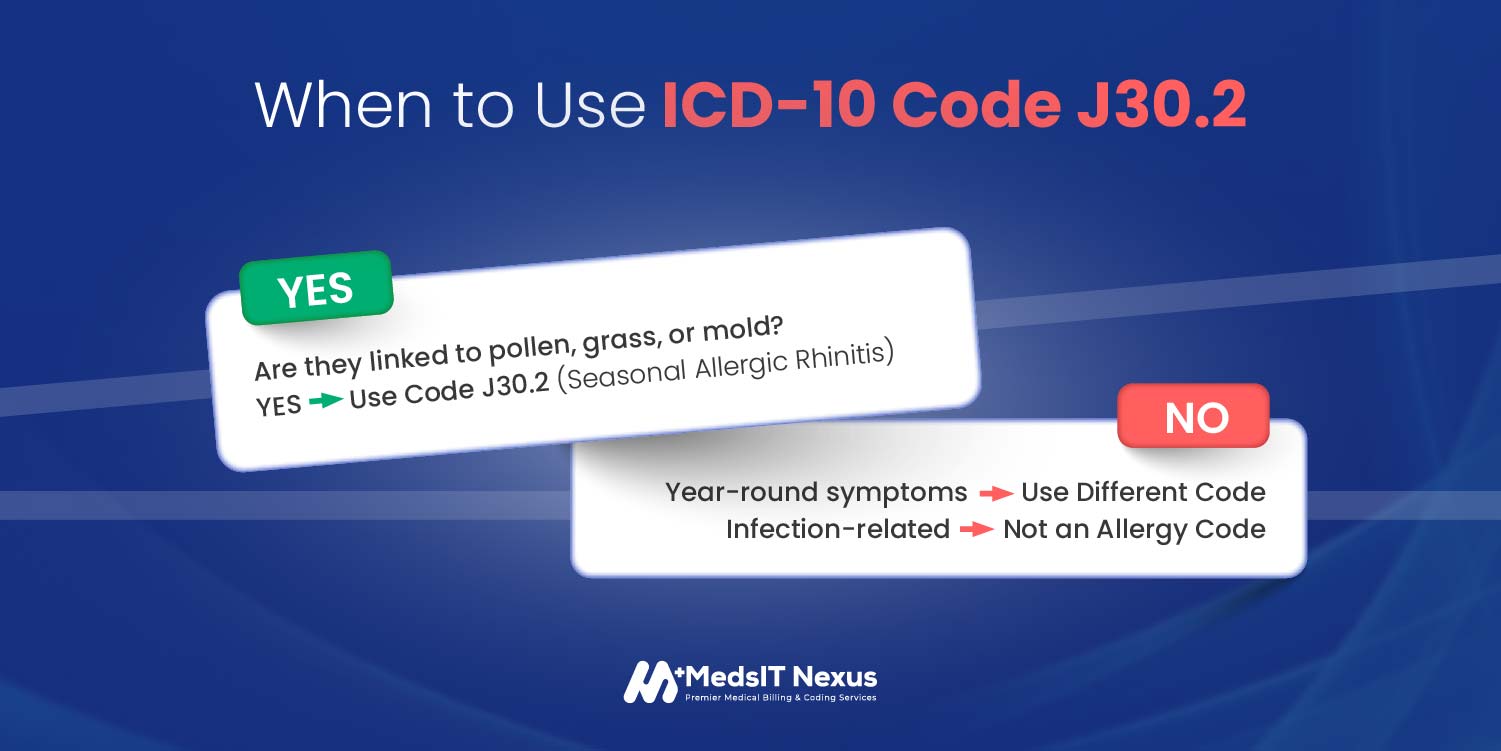
You should use J30.2 when the arising symptoms are seasonal and are directly linked to seasonal allergens. You should not use it when symptoms show links to year-round allergens, which just means that they’re not seasonally occurring allergens.
For example:
-
Spring pollen allergies? Use J30.2
-
Symptoms all year long? Use a different code
-
Infection-related symptoms? It doesn’t fall into the allergy code category.
You should critically analyze the differences between them and implement them the right way each time you use them. Payers expect the icd 10 code seasonal allergies to match the clinical story; they don’t expect them to make mistakes and cause any delays for the provider.
Seasonal Allergies Unspecified: Understanding ICD-10 Code Use
Sometimes providers are unsure about the exact trigger or pattern. In these cases, unspecified codes may be used. The icd 10 code for seasonal allergies unspecified exists for limited situations.
Unspecified codes mean the provider has not documented enough detail. While they can be acceptable in some rare cases, they are often flagged and deemed unacceptable by insurers.
Additionally, using icd 10 seasonal allergies unspecified overly can lead to audits or reduced reimbursement.
The best practice is always to note down and document the details. Easy-to-read notes reduce the need for an ICD-10 code for seasonal allergies unspecified, and greatly improve the provider’s claim success ratio.
Chronic and Complex Cases: ICD-10 Codes Beyond J30.2
Some patients experience seasonal allergies year-after-year with increasing severity. These cases may also be considered chronic. Chronic seasonal symptoms require careful documentation.
The chronic seasonal allergies ICD 10 concept applies when symptoms persist over long periods and significantly affect daily life. Providers must document duration, recurrence, and treatment response.
Using J30.2 without noting chronic patterns may underrepresent the patient’s condition. Accurate coding protects both care quality and billing accuracy.
How Different Are Environmental and Seasonal Allergies ICD 10 From Each Other?
Environmental allergies include reactions to dust, mold, pet dander, and pollen. Seasonal allergies are a subset of environmental allergies.
The environmental and seasonal allergies icd 10 overlap often confuses. Providers must clarify whether symptoms occur seasonally or year-round. This clarity determines the correct code.
When documentation is clear, coding becomes straightforward. When it is vague, errors happen.
Asthma Due to Seasonal Allergies ICD 10: What Providers Must Document
Seasonal allergies can trigger asthma symptoms in some patients. When this happens, both conditions must be documented.
The asthma due to seasonal allergies icd 10 scenario needs you to do two things:
-
File it as a diagnosis of asthma
-
A clear and non-confusing report that allergies are the trigger.
Without this link, claims may be denied. According to clinical coding rules, cause-and-effect relationships must be stated clearly in the medical record.
Common Seasonal Allergy ICD-10 Coding Mistakes (And How to Avoid Them)
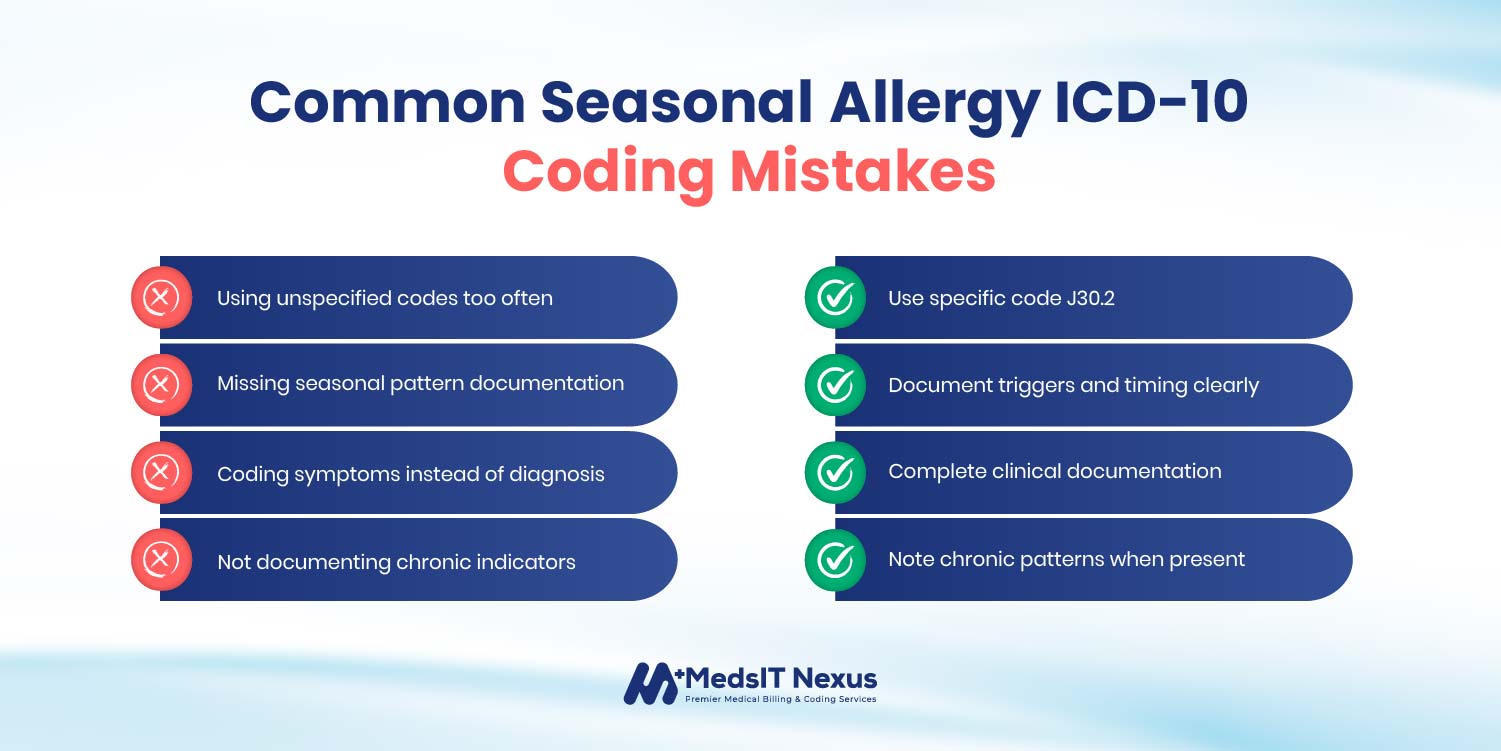
We often see the following mistakes repeated:
-
Using unspecified codes too often
-
Failing to note seasonality
-
Coding symptoms instead of diagnoses
-
Missing chronic indicators
These issues are avoidable. Partnering with professional medical coding services ensures your team stays updated on the latest coding requirements and payer guidelines.
Clear provider notes and regular coding reviews reduce risk. Accurate seasonal allergy icd 10 code usage protects revenue and compliance.
Best Practices for Accurate Seasonal Allergy ICD-10 Coding
To code seasonal allergies correctly:
-
Specifically write down the triggers and timing of the allergy
-
Use specific diagnoses, not vague ones.
-
Avoid unnecessary and unspecified codes
-
Review payer guidelines regularly
Based on standard ICD-10 protocols, specificity always improves outcomes. When documentation is strong, coding follows naturally.
Conclusion:
At first, most people think that coding seasonal allergies is going to be easy, but to their surprise, they soon find out how daunting it can actually be, especially for beginners.
Using the correct seasonal allergies ICD 10 code ensures accurate billing and clean records. This is because when you get an understanding of how J30.2 works and what it's used for, the entire process starts to seem like it's doable, and then soon after, everything seems like it's easier to manage.
FAQs
Q. What is the seasonal allergies ICD 10 code?
Yes. The seasonal allergies ICD 10 code most commonly used is Diagnosis Code J30.2, which represents seasonal allergic rhinitis caused by environmental triggers like pollen.
Q. What ICD 10 code for seasonal allergies unspecified, should be used?
Yes. The ICD 10 code for seasonal allergies, unspecified, is used only when the trigger or seasonal pattern is not clearly documented, though specific coding is always preferred.
Q. Can seasonal allergies and asthma be coded together in ICD-10?
Yes. seasonal allergies ICD 10 codes, such as J30.2, can be reported alongside asthma codes when documentation clearly links asthma symptoms to seasonal allergy triggers.
Q. Can J30.2 be used for first-time seasonal allergy visits?
Yes. J30.2 can be used for both new and established patients as long as the provider documents seasonal allergic rhinitis based on symptoms and clinical evaluation.
Q. Should J30.2 be updated if symptoms become year-round?
Yes. If symptoms are no longer seasonal and occur throughout the year, J30.2 should be replaced with the appropriate non-seasonal or perennial allergic rhinitis ICD-10 code.
Table of Contents
Services
- Medical Audit Services
- Medical Billing Services
- Medical Credentialing Services
- Medical Coding Services
- Accounts Receivable Management
- Medical Insurance Verification
- Denial Menagement Services
Who we serve
- Private Practices
- Small Practices
- Hospitals & Healthcare
- Physicians
- Medical Equipment
- Outpatient Facilities
Get in Touch
Let's start talking about getting you credentialed