




70+
Specialties
Expertise
Expertise
 Calculate Your Savings


Our EMS billing specialists handle:





EMS claims need specialized billing due to complex documentation requirements. In emergency situations, patient documentation is often incomplete, as EMS personnel may treat unidentified patients, receive outdated insurance details, or rely on incomplete hospital facesheets. Without this information, identifying the responsible payer becomes difficult, and claims are delayed before they can even be submitted.
In the case of ambulance transport, medical necessity determines whether a claim is paid. Payers review the patient care report (PCR) to confirm that the patient’s condition required an ambulance and that any other form of transportation would have been unsafe. When the report does not clearly establish this need, claims are denied, even for clinically appropriate transports.
Experienced EMS billing specialists review this documentation before a claim is submitted. They identify missing details early and confirm that each record supports the service billed, reducing avoidable denials. That’s how our EMS billing services help providers receive accurate reimbursement for the care they deliver.

Full-Cycle EMS Billing Services
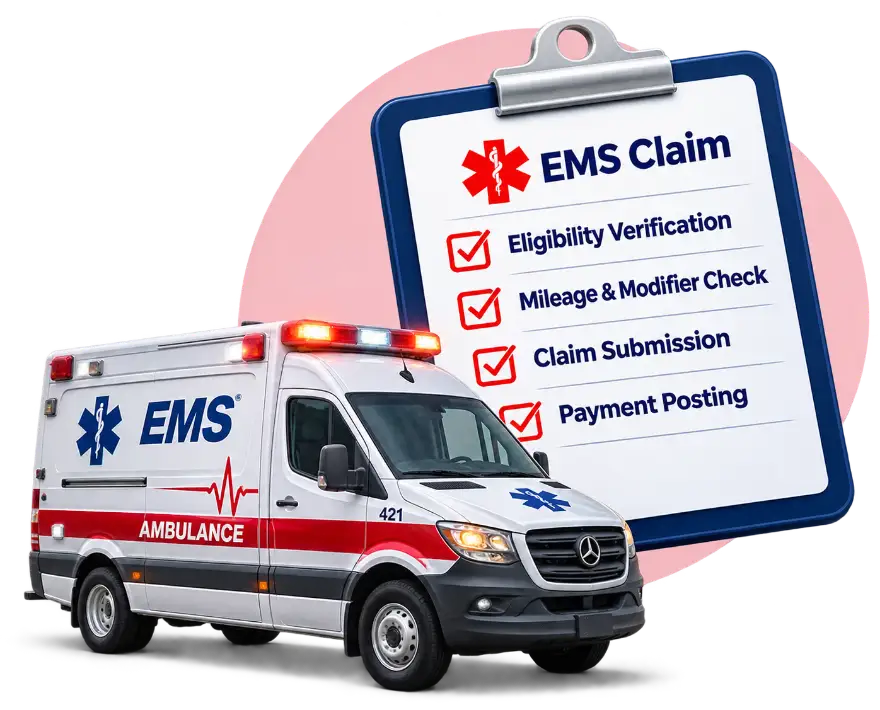
Every EMS claim relies on accurate details, including the patient's condition, the care provided, and the miles traveled. We manage each stage of emergency medical services billing, helping providers submit clean claims and receive the reimbursement they've earned.
Our specialists start the process by reviewing each patient care report to confirm the patient’s condition, the care provided, and the pickup and drop-off locations. We then ensure the documentation supports medical necessity and the level of service billed. Our AI-assisted checks also flag missing details early, so gaps are resolved before a claim is created.
Next, we identify the payer responsible for each transport. Since insurance details are rarely collected at the scene, our team gathers patient information from hospital facesheets and follow-up contact. We then verify eligibility and run coverage discovery when no insurance is on file. In case of injuries from vehicle collisions or workplace incidents, we confirm whether auto insurance or workers’ compensation should pay first.
Once coverage is confirmed, our certified coders convert the PCR into accurate HCPCS Level II codes. We code each transport at the level of care provided, from Basic Life Support to Advanced Life Support or Specialty Care Transport. We also report loaded mileage, add origin and destination modifiers, and assign ICD-10-CM codes that match the patient’s documented condition.
After coding, each claim is scrubbed against payer edits and EMS billing rules. This step catches invalid modifier pairings, missing pickup ZIP codes, and incomplete data before submission. We then submit clean claims electronically and track each one through acknowledgment and processing. If a claim is rejected, our team corrects and resubmits it promptly, within the payer’s timely filing limit.
As payments arrive, we post each one to the correct claim and compare it with the expected rate under Medicare, Medicaid, or your payer contracts. When a payer underpays or applies an incorrect adjustment, we follow up to recover the difference. We then bill remaining balances to secondary insurance first, and patients receive statements only for what they actually owe.
When a claim is denied or delayed, our denial management process identifies the cause, whether it involves medical necessity, coding, missing signatures, or coverage. Simple errors are corrected and resubmitted quickly, while complex denials are appealed with supporting PCR documentation. Meanwhile, we follow up on every open claim before its filing deadline, helping our clients maintain an average of 22 days in A/R.
EMS coding requires the correct use of HCPCS Level II codes, ICD-10-CM diagnosis codes, and applicable modifiers. From emergency response and ambulance transportation to specialty care transfers and on-site treatment, each service has specific coding requirements. Our certified coders assign the appropriate codes based on the patient's condition, level of care provided, and services documented. A few of them are:
Basic life support during emergency transport
Emergency transport with qualifying ALS care
Qualifying IV medications or advanced procedures
Basic life support during non-emergency transport
Non-emergency transport requiring ALS intervention
Interfacility care beyond standard paramedic capabilities
Medical transport using fixed-wing aircraft
Medical transport using rotary-wing aircraft
Miles traveled with the patient onboard
Mileage for fixed-wing and rotary-wing transport
On-site treatment subject to payer coverage
Patient pickup and drop-off location details
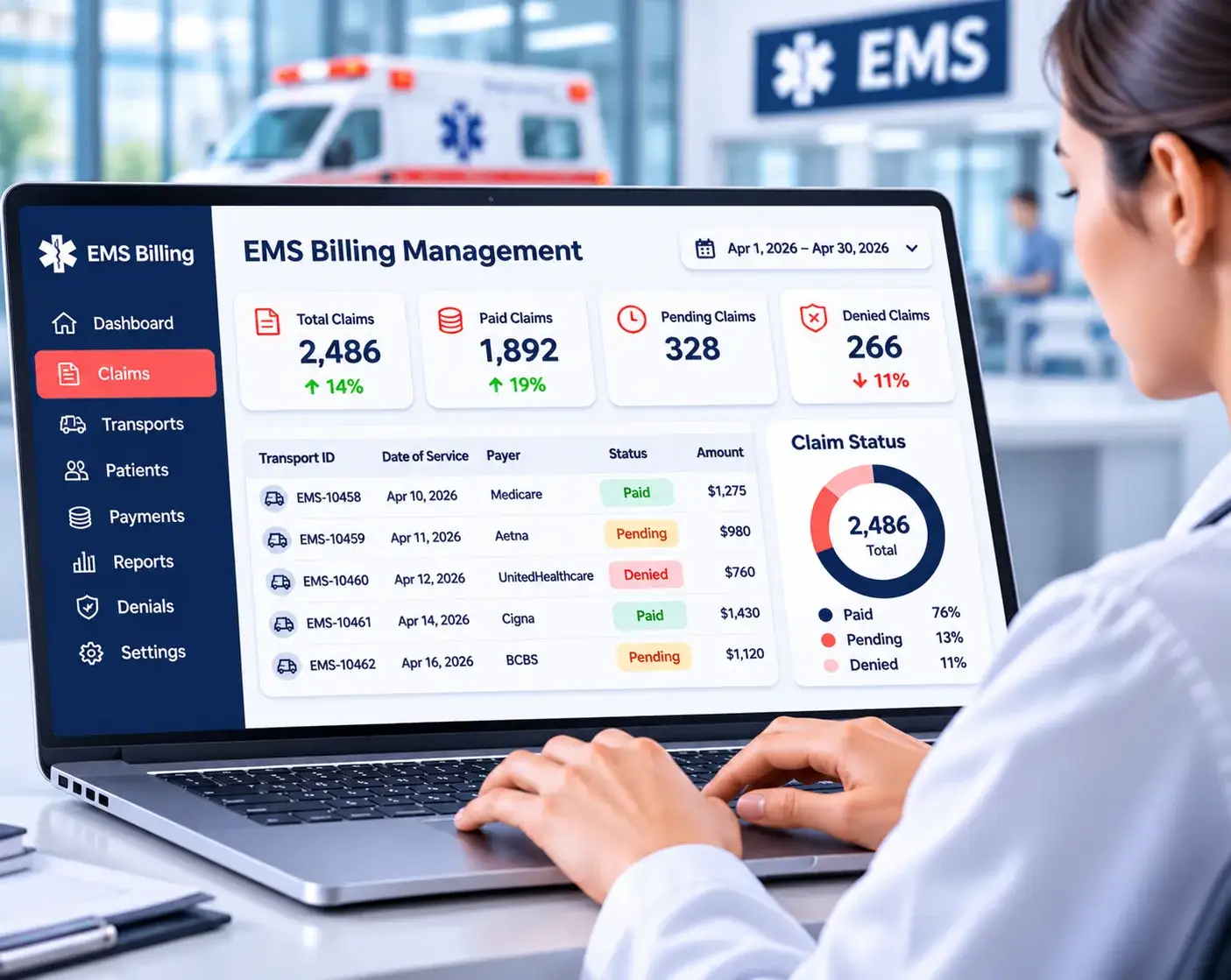
EMS revenue can still be lost after claims are submitted. Common causes include documentation denials, lower payments for downgraded service levels, and patient balances left unpaid when coverage isn’t found. Our team provides the best denial management solutions, fixing the cause of each denial and following up on every account until it’s resolved.
EMS denials often come from missing signatures, incomplete physician certification statements, or records that don’t support medical necessity. Some claims are paid at the lower BLS rate instead of ALS when documentation is unclear. We review each denial by reason code and file appeals supported by the patient care report. We also share documentation feedback to prevent the same issue on future transports.
An unpaid EMS balance needs a clear owner before it needs another reminder. We resolve payer disputes across your emergency care services, then verify patient responsibility against benefits, payments, and adjustments. This connects insurance recovery with accurate patient statements and respectful follow-up, while keeping disputed amounts under review. This process helps our clients maintain an average of 22 days in A/R.
Every EMS service operates under its own billing requirements. From Fire Department EMS to hospital-based EMS, our dedicated team manages your claims from review to final payment. Our EMS billing services cover:
Emergency medical services involve different levels of care, transportation, and on-site treatment, each with specific billing requirements. Our specialized team manages claims based on the services provided, supporting documentation, and applicable payer guidelines. Our billing expertise extends across the following EMS services:
Billing for emergency ground transportation involving basic life support and patient care.
Claims management for emergency transportation involving advanced life support assessments or interventions.
Billing for advanced emergency care involving qualifying IV medications or medical procedures.
Billing support for on-site medical assistance and emergency response during public events.
Billing for medically necessary ambulance transportation, including scheduled and unscheduled trips.
Claims management for medical transportation using both fixed-wing and rotary-wing ambulance aircraft.
Billing for on-scene patient assessment and treatment without transportation, following payer guidelines.
Claims management for community-based patient assessments, preventive services, and routine follow-up visits.

EMS claims can be underpaid even when they show as paid. For example, a payer may pay an ALS transport at the lower BLS rate, pay for fewer miles than were billed, or reduce the payment below the fee schedule or your contract. To catch this, our automated tools compare every payment with the original claim and flag any difference right away. From EMS response to emergency physician services billing, we manage every step of emergency care revenue. Furthermore, our certified specialists review the patient care report, verify the correct payment, and file a reconsideration or appeal to recover the balance. This way, your practice’s EMS revenue is protected from remittance all the way to recovery.
We help EMS providers complete enrollment with Medicare, Medicaid, and commercial payers, ensuring they meet applicable requirements and are ready to bill for covered services.
Gather required licenses, certifications, permits, and NPI details.
Complete and submit applications to applicable insurance payers.
Address payer requests and track enrollment application progress.
Verify enrollment approvals, effective dates, and billing eligibility.
Every EMS provider needs a billing partner with the same reimbursement expertise they bring to patient care. Our billing specialists meet each payer’s rules and offer AI-powered claim checks to catch coding and documentation gaps before submission. That’s how we maintain a 99% clean claim rate.
As a dedicated EMS billing company, we manage the entire revenue cycle with expertise. Our billing experts find missing coverage through insurance discovery, work denials, and payment gaps until they’re resolved.
The team also handles patient balances in line with Medicare assignment rules and state balance billing laws for ground EMS. For hospital-based EMS programs, our support also extends to emergency department billing services and urgent care billing services, giving your organization one billing partner across its EMS revenue cycle management.
Find active insurance for self-pay transports, so fewer balances go unpaid.
Secure handling of patient, insurance, and transport data at every billing step.
Consistent payer follow-up on denials, short-paid ALS claims & aging balances.
AI tools match each claim to its ePCR for signatures, mileage, and service level.




Trusted by healthcare organizations for the highest standards of data privacy and regulatory compliance.

Robert Langford
EMS Division Chief
Cigar Valley Fire Department, Fresno, CA
“Our claims kept getting denied for missing signatures and unclear documentation, and our small administrative team couldn’t keep up with the appeals. MedsIT Nexus reviewed every patient care report before billing and showed our crews exactly what payers needed to see. Within a few months, our denials dropped, and our revenue became far more predictable.”
Cigar Valley Fire Department provides 911 emergency response and transport across several communities. Many claims were denied because patient signatures or signature exception documentation were missing, or the patient care report didn’t clearly show why ambulance transport was medically necessary. Some ALS transports were paid at the lower BLS rate because the report didn’t support the ALS care provided, and unresolved claims sat for months, putting earned revenue at risk.
MedsIT Nexus audited six months of denied and downgraded claims and traced each one to its specific documentation gap. We introduced a pre-billing ePCR review covering signatures, medical necessity, and documentation for the level of service billed. Our team also shared monthly documentation feedback with EMS leadership and appealed eligible denials with complete patient care reports within payer deadlines.
We connect with your ePCR, dispatch, and billing systems, with no software changes required.






Every response.
Every claim.










 Direct ePCR Access
 Faster Onboarding
 Accurate Mileage Data
 Live Claim Tracking
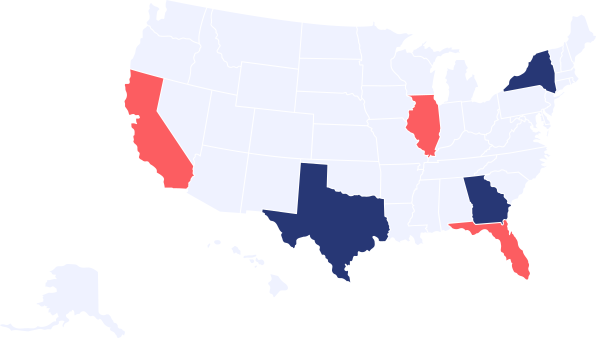
From private to fire department EMS, our EMS billing specialists help providers nationwide follow state requirements, lower denials, and strengthen reimbursement.

Each state sets its own Medicaid ambulance rates, licensing requirements, and patient billing rules. We apply the right state regulations to every claim and patient statement, so your EMS billing stays compliant and payments arrive without unnecessary delays.
Every payer handles EMS claims differently, from what it covers to the records it requires and how much it pays. A claim that meets one payer’s standards can still be denied by another. Our team follows each payer’s current policies and prepares every claim to match them.














Tracking payer policy updates, medical necessity rules, and state ambulance billing changes so EMS claims process without delays.
Plan coverage, network rules, and payment terms.
State rates, transport limits, and approvals.
Fee schedule, signature, and PCS requirements.
Auto, workers' comp, and Advantage plan claims.
State laws, HCPCS updates, and documentation.
Knowing each payer's ambulance rules helps reduce denials and speed up payments.
Many EMS transports follow vehicle collisions or workplace injuries. In these cases, auto insurance or workers’ compensation may be responsible before the patient’s health plan. We identify the correct payer order, bill each one in sequence, and follow Medicare secondary payer rules where they apply.
100+ Payers Supported
We manage every payer’s requirements, so your team can stay focused on emergency response.
Read reviews from fire departments, municipal EMS, and private ambulance providers that rely on our EMS medical billing services.
 Verified Review
“Our claims were constantly coming back for missing signatures and unclear documentation. MedsIT Nexus now reviews every patient care report before billing and tells us exactly what’s missing. Our denials have dropped noticeably, and our paramedics understand what payers expect to see.”
 5.0
MedsIT Nexus provides EMS billing services that review every patient care report, find missing coverage, and follow each claim through to payment. Book a consultation if your billing process is facing any of these issues:
Get expert support tailored to your EMS billing needs.
Talk to an EMS billing specialist. No obligation.
Clear answers for EMS providers managing ambulance coding, documentation, payer rules, denials, and reimbursement.
Answers built around real EMS billing questions.
EMS billing services manage billing for emergency medical services providers, turning each patient care report (PCR) into an accurate, payable claim. The work covers checking the PCR, finding insurance coverage, coding the level of service and mileage, submitting claims and posting payments, followed by denial management, appeals, and patient balances. At MedsIT Nexus, our EMS billing services help providers get paid correctly for the care they deliver.
Outsourcing emergency medical billing makes sense because ambulance claims follow rules that most in-house teams rarely manage, such as level-of-service coding, loaded mileage, signature requirements, and state billing laws. An experienced billing partner provides certified coders, consistent payer follow-up, and coverage discovery for self-pay transports, while your team stays focused on emergency response.
The best way to confirm accurate reimbursement for ALS and BLS calls is to compare each payment with the level billed and the patient care report. Payers often pay ALS claims at the BLS rate when the record doesn't clearly show an ALS assessment or intervention. Regularly reviewing remittances and appealing unsupported downgrades keeps each transport paid at the correct level.
No, the No Surprises Act does not apply to ground ambulance billing. Its balance billing protections cover air ambulance services, while ground ambulance was referred to a federal advisory committee for further review. However, many states, including California, have passed their own ground ambulance balance billing laws, so patient billing must follow the rules of each state where you operate.
EMS billing collection rates improve when documentation is complete and coverage is accurate from the start. Reviewing every patient care report before billing, running coverage discovery on self-pay accounts, and billing the correct primary payer reduce denials and unpaid balances. Consistent payer follow-up, timely appeals, and clear patient statements with payment options help recover more of the revenue already earned.
Emergency and non-emergency ambulance billing differ in how the transport was needed and arranged. Emergency transports respond immediately to a 911 call and are billed with emergency codes at higher rates, while non-emergency transports are scheduled in advance and often require a physician certification statement. Billing the wrong status can lead to denials or incorrect payments.
The most common causes of EMS billing denials are unclear medical necessity documentation, missing patient signatures, incorrect level-of-service or mileage coding, missing physician certification statements, and inactive coverage. Best practices to prevent them include reviewing every patient care report before billing, verifying eligibility, coding directly from the documentation, and tracking denial trends to fix recurring issues at the source.
Legitimate 911 calls are often denied for lack of medical necessity because the patient care report doesn't clearly explain why other transportation would have been unsafe. Payers decide based on documentation, not the type of call, so the patient's condition, symptoms, and treatment must be recorded in detail. Accurate ICD-10 coding and a careful review before submission prevent many of these denials.
A high number of transports for patients who can't pay directly affects billing operations by increasing self-pay balances and lowering overall collection rates. However, many of these patients may qualify for Medicaid, including retroactive coverage, or have insurance that wasn't identified at the time of transport. Coverage discovery, payment plans, and clear financial assistance policies help recover what's possible while staying compliant.





















 Verified Review


