Calculate Your Savings


Treadmill Stress Test CPT Code: Complete Coding and Billing Guide
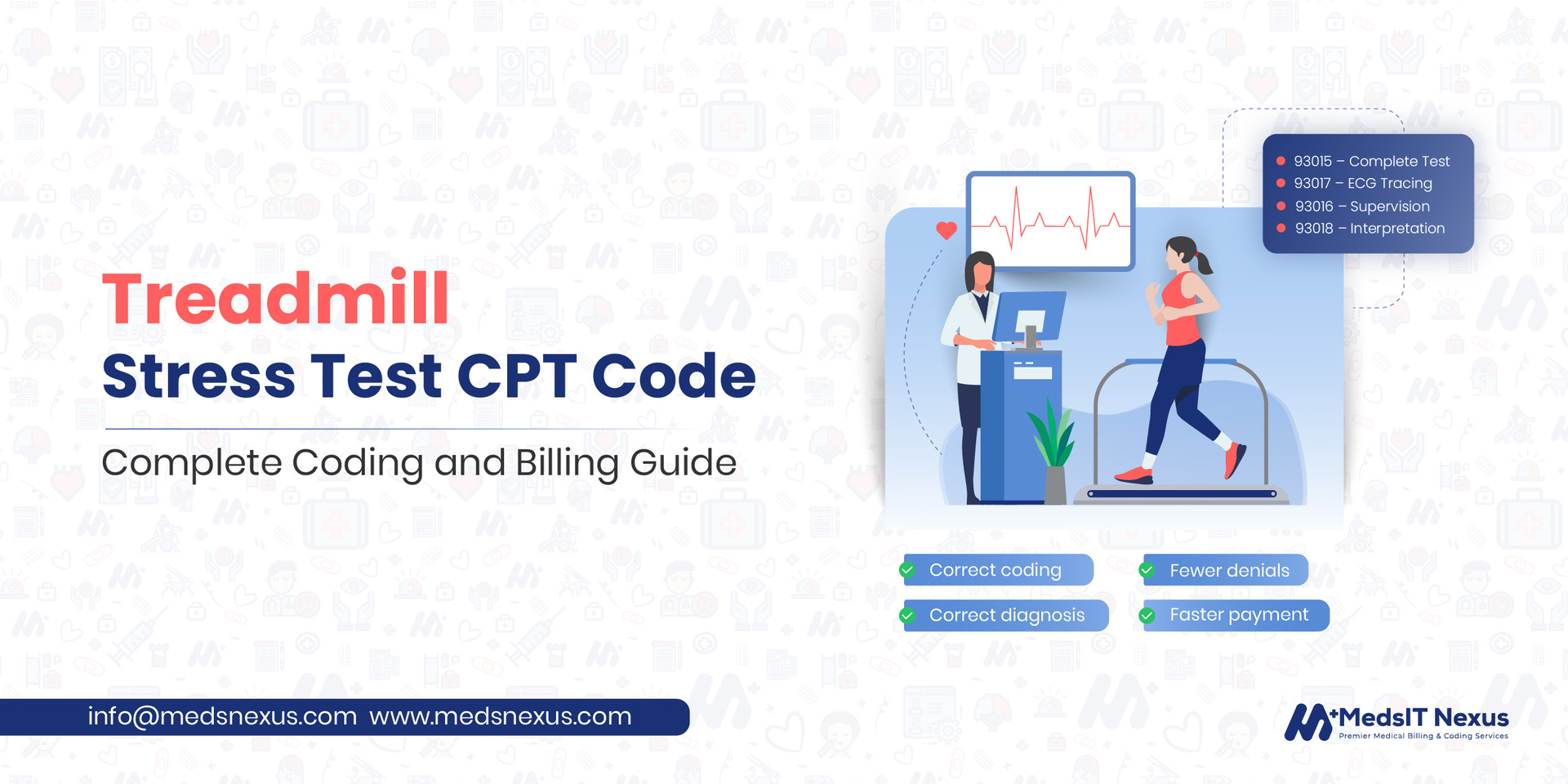
Treadmill stress testing is a commonly performed cardiovascular diagnostic procedure that is used to evaluate how the heart responds to physical activity. While the clinical process is also well established, accurately reporting the treadmill stress test CPT code requires a clear understanding of coding guidelines, service components, and documentation requirements.
Although the test itself is routine, coding errors can easily occur when supervision, tracing, or interpretation details are overlooked even at the slightest.
Using the wrong CPT code or diagnosis code can further lead you to denied claims or slow payments.
That’s why this guide clearly explains treadmill stress test CPT codes, related diagnosis codes, and simple billing rules. It helps you code correctly and get paid on time, without any confusion.
Key Takeaways
-
Treadmill stress test billing requires accurate CPT selection based on supervision, tracing, and interpretation.
-
CPT 93015 applies only when all components are performed by one provider.
-
Use 93016, 93017, and 93018 when services are split to avoid claim denials.
-
Physician supervision must be documented for compliant billing.
-
Diagnosis codes must support medical necessity, with proper ICD-9 to ICD-10 mapping when required.
-
Incomplete documentation and incorrect modifiers (26 or TC) are common causes of rejected claims.
-
Professional coding support helps improve accuracy, compliance, and timely reimbursement.
CPT Codes for Treadmill Stress Testing
Before looking at billing or paperwork rules, it’s important to understand the CPT codes used for treadmill stress tests. These codes are used to report stress tests done on a treadmill or exercise bike, with heart activity monitored during the test.
CPT Codes
-
93015
Cardiovascular stress test using maximal or submaximal treadmill or bicycle exercise, continuous electrocardiographic monitoring, and or pharmacological stress, with supervision, interpretation, and report
-
93016
Cardiovascular stress test using maximal or submaximal treadmill or bicycle exercise, continuous electrocardiographic monitoring, and or pharmacological stress, supervision only, without interpretation and report
-
93017
Cardiovascular stress test using maximal or submaximal treadmill or bicycle exercise, continuous electrocardiographic monitoring, and or pharmacological stress, tracing only, without interpretation and report
-
93018
Cardiovascular stress test using maximal or submaximal treadmill or bicycle exercise, continuous electrocardiographic monitoring, and or pharmacological stress, interpretation, and report only
Each code represents a specific component of the treadmill stress test. Selecting the correct treadmill stress test CPT code depends on which portions of the service were performed and by whom.
Applicable ICD-9 Treadmill Stress Testing Codes for Diagnosis
In addition to CPT selection, correct diagnosis coding is required to support medical necessity. Below are commonly reported ICD-9 codes associated with treadmill stress testing.
ICD-9 Codes
-
410: Acute myocardial infarction
-
413: Angina pectoris
-
424.1: Aortic valve disorders
-
427.5: Cardiac arrest
-
429.2: Cardiovascular disease, unspecified
-
786.5: Chest pain, unspecified
-
426: Conduction disorders
-
746.86: Congenital heart block
-
746.85: Coronary artery anomaly
-
429.4: Functional disturbances following cardiac surgery
-
394.0: Mitral stenosis
-
412: Myocardial infarction, old
-
429.1: Myocardial degeneration
-
411: Other acute and subacute forms of ischemic heart disease
-
414: Other forms of chronic ischemic heart disease
-
416.0: Primary pulmonary hypertension
- 395.0: Rheumatic aortic stenosis
ICD-9 to ICD-10 Mapping Considerations
Before submitting claims for a treadmill stress test CPT code, providers should confirm whether the patient’s insurance plan still accepts ICD-9 diagnosis codes. Many payers now require ICD-10 codes, which makes proper code mapping important.
When moving from ICD-9 to ICD-10, one ICD-9 code can match several ICD-10 options. The most accurate ICD-10 code should always be chosen based on the patient’s medical records.
Example of ICD-9 to ICD-10 Mapping
ICD-9 Code
414.01: Coronary atherosclerosis of native coronary artery
Corresponding ICD-10-CM Codes
-
I25.110: Atherosclerotic heart disease of native coronary artery with unstable angina pectoris
-
I25.111: Atherosclerotic heart disease of native coronary artery with angina pectoris with documented spasm
-
I25.118: Atherosclerotic heart disease of native coronary artery with other forms of angina pectoris
-
I25.119: Atherosclerotic heart disease of native coronary artery with unspecified angina pectoris
Assigning the most accurate ICD-10 code requires a thorough review of clinical documentation and physician notes.
What Is a Treadmill Stress Test?
A treadmill stress test evaluates cardiac function while the patient performs controlled physical exercise. As exercise intensity increases, heart rate, blood pressure, and electrocardiographic activity are continuously monitored.
This diagnostic test helps physicians identify abnormalities in heart rhythm, blood flow issues, and signs of ischemic heart disease that may not appear at rest.
Because treadmill stress testing does not always include imaging, selecting the correct treadmill stress test CPT code is critical to avoid billing errors.
How to Select the Correct Treadmill Stress Test CPT Code
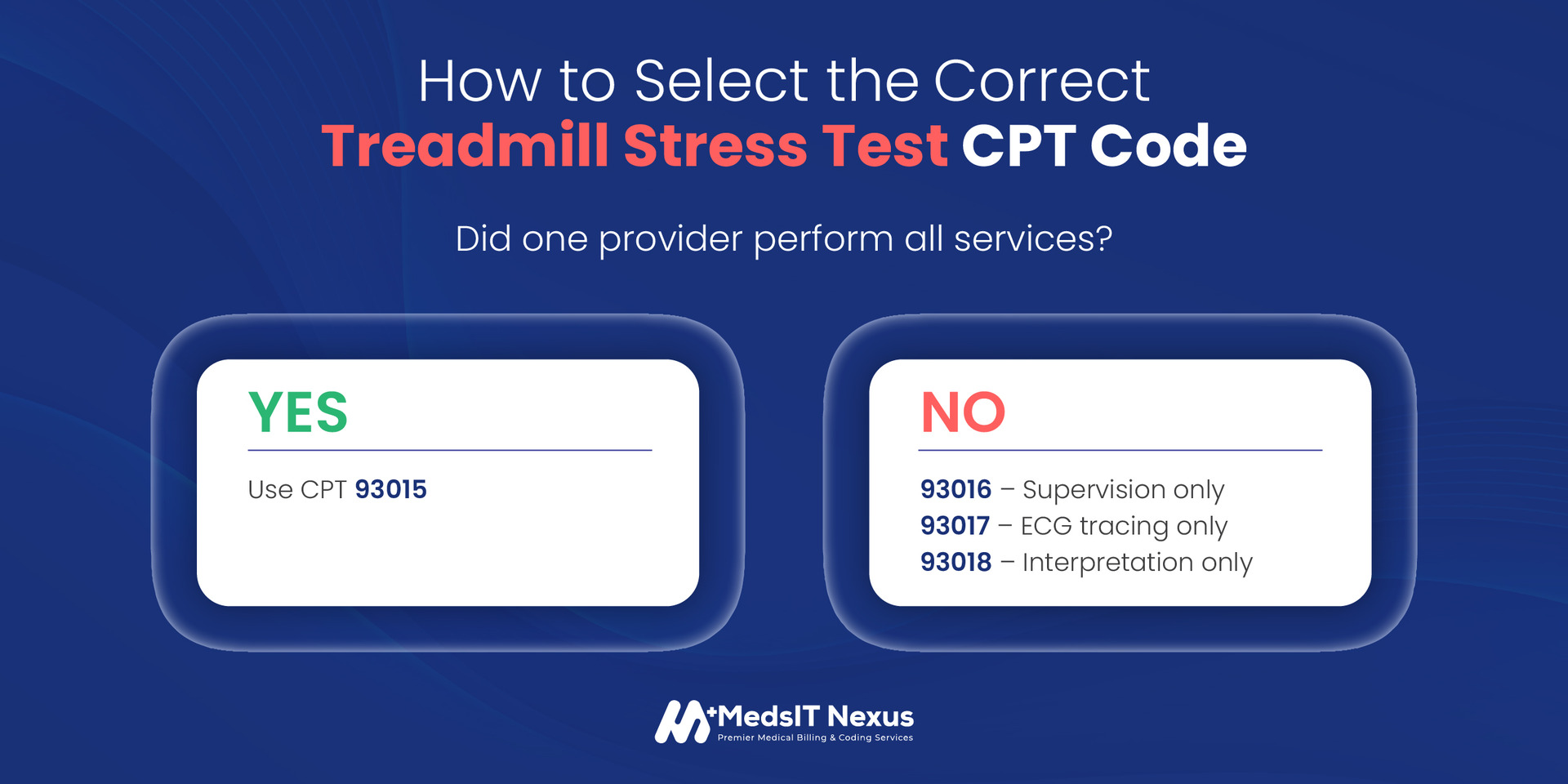
Choosing the correct treadmill stress test CPT code depends on whether the service was billed globally or split into components.
Key factors to review include:
-
Physician supervision of the test
-
ECG tracing performance
-
Interpretation and report documentation
If a single provider performs all components, CPT 93015 is generally reported. When services are divided among providers or facilities, component codes such as 93016, 93017, or 93018 must be used appropriately.
Needed Documents for Stress Test Billing
Clear and complete documentation supports accurate coding and reimbursement.
Medical records should include:
-
Indication for the treadmill stress test
-
Exercise duration and patient response
-
ECG monitoring findings
-
Physician supervision details
-
Final interpretation and report
Incomplete documentation can deem the treadmill stress test CPT code billed as incorrect or invalidated, even if the service was medically necessary.
Common Coding Errors to Avoid
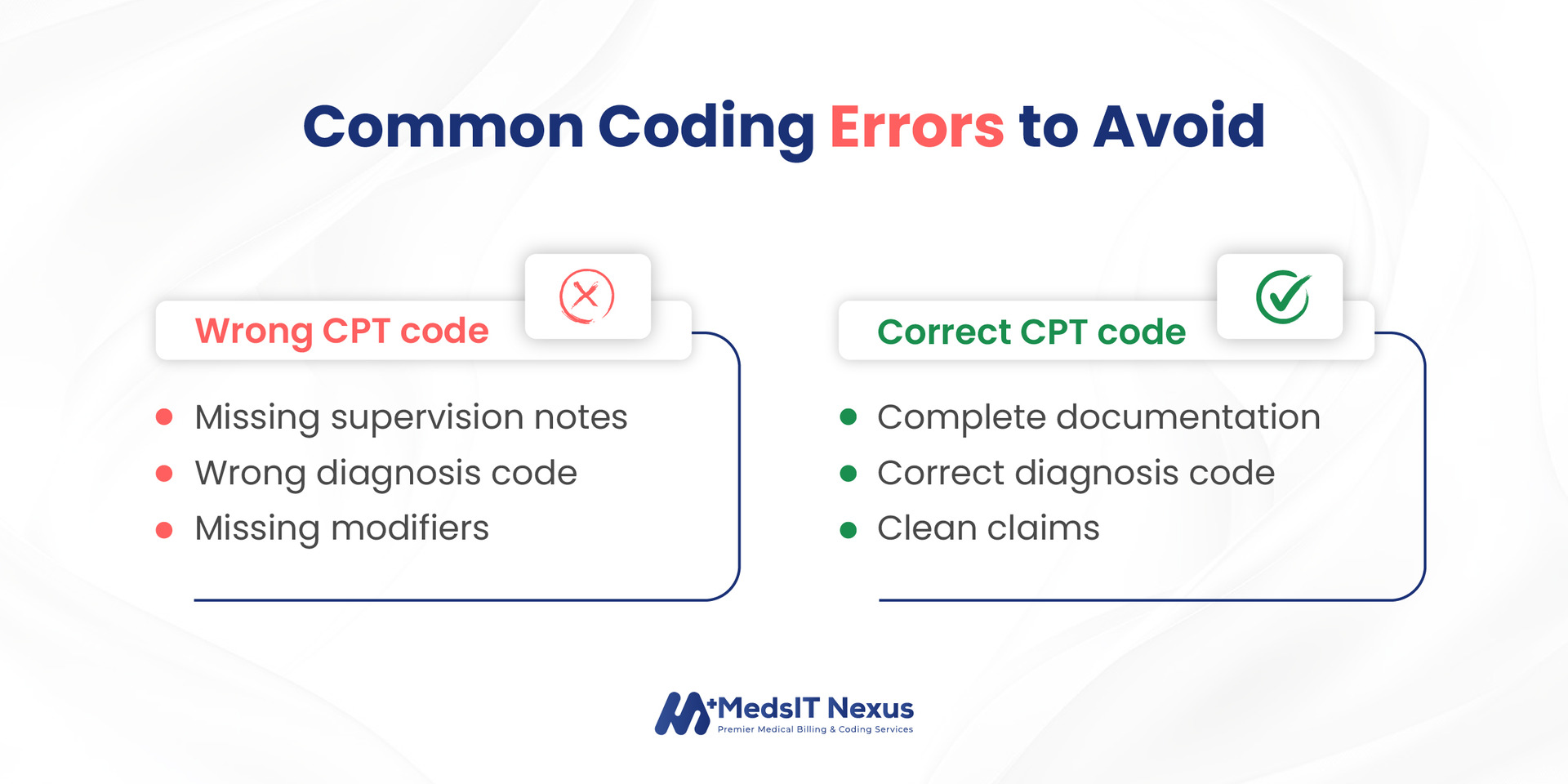
Errors in treadmill stress test billing can lead to denials or audits.
Common mistakes include:
-
Billing global codes when services were split
-
Using stress test codes when imaging was performed without reporting imaging CPTs
-
Missing supervision documentation
-
Incorrect diagnosis code selection
Regular internal audits can help identify and correct these issues.
Role of Modifiers in Treadmill Stress Test Billing
Modifiers may be required to distinguish professional and technical components.
Commonly used modifiers include:
-
Modifier 26 for professional services
-
Modifier TC for technical services
Always confirm payer-specific requirements before applying modifiers.
When to Go For Professional Coding Support
Keeping up with CPT guidelines, diagnosis code transitions, and payer policies can be challenging for busy practices.
Professional medical coding services help:
-
Improve coding accuracy
-
Reduce claim rejections
-
Ensure compliance with evolving regulations
Experienced coders understand the nuances of selecting and mapping CPT codes for treadmill stress tests.
Conclusion
Treadmill stress testing is an important test used to check heart health, or more precisely, how well it performs when put under physical stress. The test itself is very commonly conducted, but billing it the right way still takes a lot of care and attention.
Using the correct treadmill stress test CPT code, choosing the right diagnosis code, and keeping clear patient records can greatly reduce the chances of billing mistakes being made. If these steps are followed the right way, practices can avoid any potential issues and keep their revenue growing in a steady flow.
Frequently Asked Questions
Q. What is the most commonly used treadmill stress test CPT code?
A. CPT 93015 is most commonly used when supervision, tracing, and interpretation are performed together.
Q. Can treadmill stress tests be billed using component codes?
A. Yes, CPT codes 93016, 93017, and 93018 are used when services are split.
Q. Are ICD-9 codes still accepted for treadmill stress testing?
A. Some carriers may still accept ICD-9 codes, but many require ICD-10-CM codes. Always verify with the payer.
Q. Does treadmill stress testing require physician supervision?
A. Yes, physician supervision is required and must be documented accordingly.
Q. Can I bill CPT 93015 if the cardiologist only reviewed the ECG tracing afterward, without being present during the test?
A. No. CPT 93015 requires the physician to supervise the test while it's being performed, not just review results later. If the physician wasn't present during the exercise portion, you must use CPT 93018 (interpretation and report only) instead.
Table of Contents

Services
- Medical Audit Services
- Medical Billing Services
- Medical Credentialing Services
- Medical Coding Services
- Accounts Receivable Management
- Medical Insurance Verification
- Denial Menagement Services
Who we serve
- Private Practices
- Small Practices
- Hospitals & Healthcare
- Physicians
- Medical Equipment
- Outpatient Facilities
Get in Touch
Let's start talking about getting you credentialed
Related Posts
New Patient Visit CPT Codes in Urgent Care Billing