Calculate Your Savings


Transaminitis ICD 10: Complete Guide to Elevated Liver Enzymes & Billing Rules
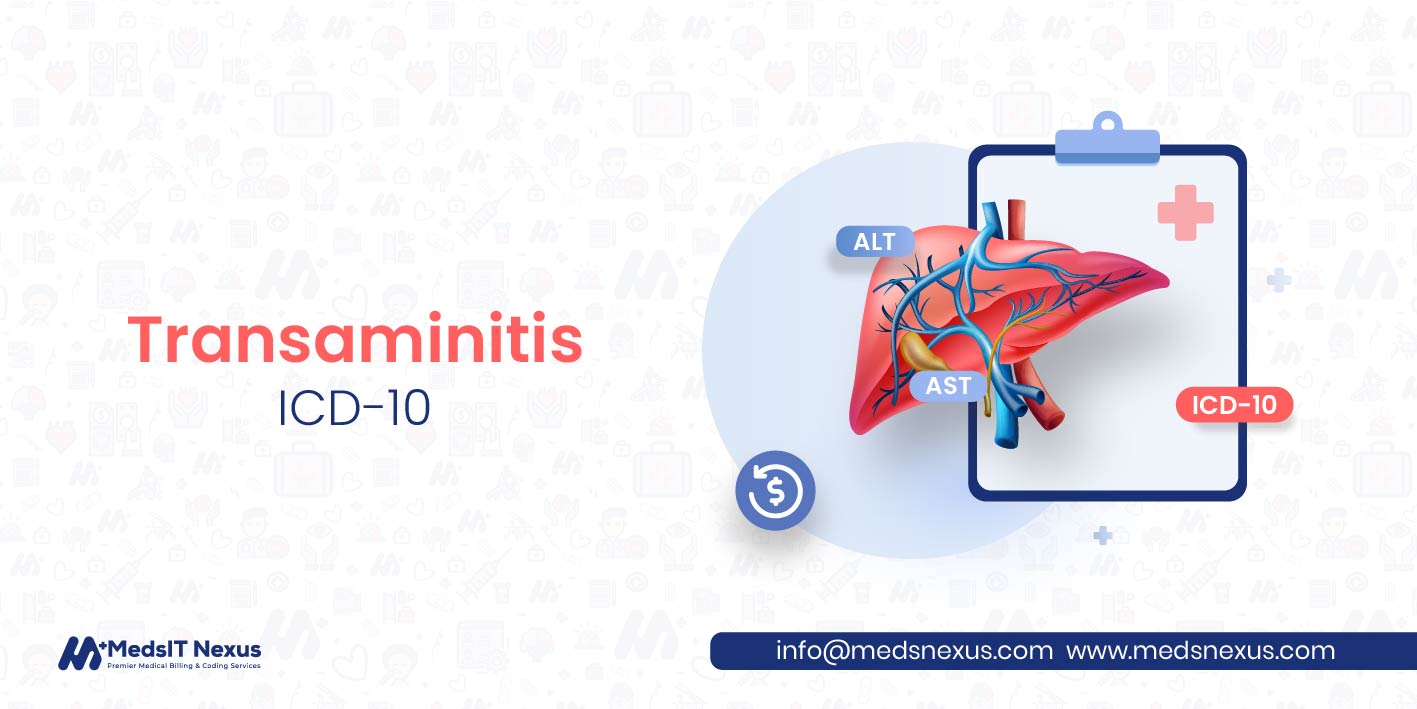
High ALT and AST are frequent findings on routine patient panels where the patient is pain-free, has no jaundice, and has never been diagnosed with liver disease. There are several perspectives, as at this stage, there is a risk of the clinical meaning (which may be hepatocellular injury), the documentation burden (what the provider will say), and the billing risk (what the payer will accept), all in different directions.
What Transaminitis ICD 10 Means in Clinical Documentation
Several viewpoints are important since transaminitis is a shorthand term in clinical language, rather than a diagnosis in the ICD-10-CM: Transaminitis is a blood test with high levels of transaminase enzymes, most commonly:
-
ALT (alanine aminotransferase)
-
AST (aspartate aminotransferase)
ALT and AST are found in cells. Hepatocellular irritation or damage augments membrane leakage, elevating serum levels. ALT is more specific to liver damage than AST, as AST may increase due to liver damage and non-hepatic diseases like skeletal muscle disorders.
Pattern recognition and risk assessment are usually the starting point of a cause-based evaluation. Education programs in hepatology focus on historical issues like alcohol consumption, medications, herbal products, the risk of viral hepatitis, metabolic risk, and physical indicators of chronic liver disease.
Why ICD-10 Does Not List Transaminitis as a Code Title
Multiple perspectives are important since ICD-10-CM does not give priority to informal clinical terms but rather gives priority to classified findings and diagnoses. Transaminitis is an etiological pattern, rather than an etiology. ICD-10-CM categorizes this pattern in abnormal clinical and laboratory findings, explaining why the appropriate code is created in measurable language.
The practical consequence: providers who look up the set of codes that contain the transaminitis might be offered a closer abnormal enzyme alternative and get a code that fails to justify liver-specific medical necessity.
The Correct icd 10 transaminitis
Multiple perspectives matter since the correct icd 10 for transaminitis will be determined by the degree of diagnostic assurance. An established disease must have a disease code. An abnormal-finding code is needed to describe an isolated lab abnormality.
R74.01 – icd 10 code for elevated transaminase levels is the code that corresponds to elevated ALT/AST, where a specific liver diagnosis has not been established.
Coding teams use R74.01 to support:
-
Repeat hepatic function panels
-
Hepatitis serologies
-
Iron studies
-
Abdominal ultrasound orders
-
Follow-up E/M visits for trend review
-
The ICD-10-CM index entries direct users to R74.01 for "elevation (ALT).
Why R74.01 Gets Denied Even When It’s Correct
Accuracy does not assure payment. A technically correct diagnosis code may be denied based on missing documentation of three aspects: payer-facing, severity, clinical context, and an explicit plan of care.
Key Denial Triggers
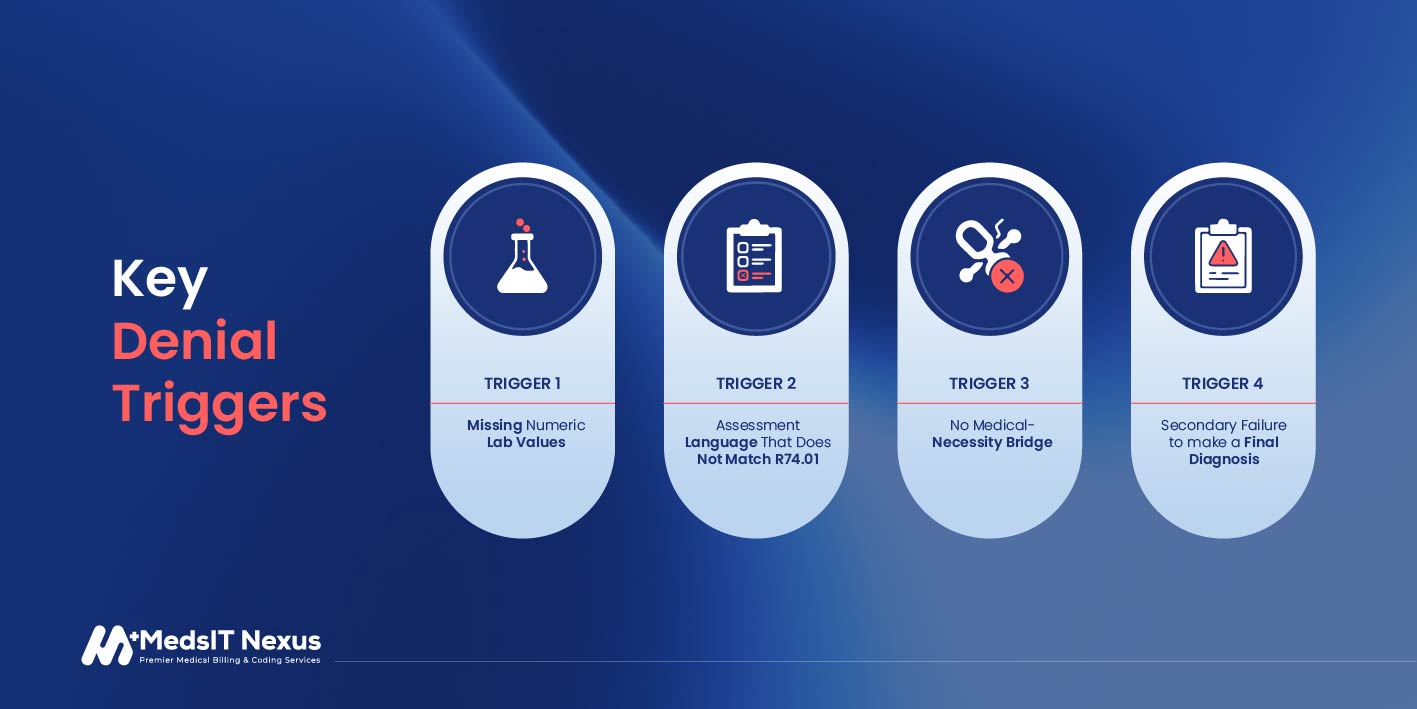
Trigger 1: Missing Numeric Lab Values
It is so common to encounter documentation that says elevated LFTs without the real values of ALT and AST. Without a quantified level of enzymes, the relationship between abnormal results and a sequence of follow-up testing seems to be rather low, which is a weakening of medical necessity.
Trigger 2: Assessment Language That Does Not Match R74.01
R74.01 in particular refers to increased liver transaminase. Record keeping where the only diagnosis is abnormal liver function, or high enzymes, or abnormal labs, but there is no mention of ALT or AST, creates ambiguity and leads to code drift.
Trigger 3: No Medical-Necessity Bridge
Orders like liver ultrasound, hepatitis B test, hepatitis C test, or medication changes should contain a sentence that definitively ties the abnormal ALT/AST values to the diagnostic or treatment plan. In the absence of that link, payers might wonder why it is necessary.
Trigger 4: Secondary Failure to make a Final Diagnosis
R74.01 is not intended to stay on the claim after a confirmed diagnosis of fatty liver disease, viral hepatitis, alcohol-related liver disease, or drug-induced liver injury.
The ICD-10-CM code sets allow the use of symptom and sign codes when the definitive diagnosis has not yet been established. Nevertheless, when some known condition is present, and the abnormal finding is part of it, then the symptom code should not be reported as primary.
R74.01 vs. R89.0: Selecting the Right Code
Although both codes reference abnormal enzyme findings, they describe different clinical contexts.
R74.01
-
Applies to elevated liver transaminases (ALT/AST) in blood
-
Supports liver-focused diagnostic evaluation
-
Clearly communicates serum-based liver enzyme elevation
R89.0
-
Abnormal enzyme levels in specimens from other organs, systems, or tissues
-
Applies to findings outside the blood chemistry context
Is R74.01 Billable?
Yes, R74.01 is a valid, billable ICD-10-CM code. Moreover, code validity is not the only determinant of reimbursement, however. The payment is determined by:
-
The CPT service billed (E/M level, labs, imaging)
-
Payer-specific coverage policies and diagnosis-to-test edits
-
Alignment between documentation, assessment, and plan
Is R74.01 Primary Listable?
Yes, in cases where high transaminases cause the experience, and the diagnosis has not been made.
Outpatient first-listed diagnosis rules differ from inpatient principal diagnosis rules, but ICD-10-CM guidance supports reporting sign and symptom codes when no confirmed diagnosis exists. Once an etiology is confirmed, the established diagnosis should be sequenced ahead of R74.01.
When R74.01 Is No Longer Appropriate
R74.01 should not be used once a definitive cause is documented. Common causes of mildly elevated transaminases include:
-
Nonalcoholic fatty liver disease (NAFLD)
-
Alcohol-related liver disease
-
Drug-induced liver injury
-
Hepatitis B
-
Hepatitis C
-
Hemochromatosis
-
Autoimmune hepatitis
-
Wilson disease
Extrahepatic causes may include thyroid disorders, celiac disease, hemolysis, and muscle disorders.
Once documentation confirms one of these conditions, coding must transition to the definitive diagnosis.
Coding Steps to Reduce Denials
Step 1: Confirm the Finding
Step 2: Check for Established Diagnosis
Step 3: Match the Code to Certainty Level
Step 4: Update Sequencing
Reimbursement Considerations
R74.01 promotes medical necessity related to the direct evaluation of liver enzyme elevation. It does not warrant irrelevant services. A combination of R74.01 and unrelated imaging or specialty referrals usually results in edits on claims.
Common ICD-10 Coding Errors
-
Using a nonspecific enzyme code instead of R74.01
-
Continuing R74.01 after a definitive diagnosis is documented
-
Omitting ALT/AST values
-
Listing R74.01 without addressing liver enzymes in the plan
-
Treating “transaminitis” as a diagnosis rather than an abnormal finding
How Long Should R74.01 Be Used?
R74.01 remains appropriate while:
-
ALT/AST elevation persists
-
No confirmed etiology exists
-
Workup or monitoring is ongoing
Once the underlying cause is established, the confirmed diagnosis replaces R74.01 as the leading code.
Conclusion
Transaminitis icd 10 code is at the confluence of clinical ambiguity and payer analysis. High levels of ALT and AST should be well recorded, measured, and related to a specific plan. When there is no conclusive diagnosis made, R74.01 is the right ICD-10-CM code to use in elevated liver transaminases. Medical necessity is well documented, safeguarding reimbursement and minimizing audit exposure. Correct code transitions finalize the process as soon as a confirmed diagnosis is seen in the record.
FAQs
1. What is the icd 10 code for transaminitis?
The correct icd 10 elevated transaminases ALT and AST without a confirmed liver diagnosis is R74.01 – Elevation of liver transaminase level.
2. Can R74.01 be used as a primary diagnosis?
Yes, R74.01 can be listed as the primary diagnosis when elevated liver transaminases are the main reason for the visit and no definitive cause has been established.
3. Why do claims with R74.01 get denied?
Denials commonly occur due to missing ALT/AST numeric values, vague documentation, lack of a clear medical-necessity link, or failure to update the code after a confirmed diagnosis.
4. When should R74.01 no longer be used?
R74.01 should be replaced once a definitive diagnosis, such as fatty liver disease, viral hepatitis, or drug-induced liver injury, is documented in the medical record.
5. Is transaminitis a diagnosis in ICD-10-CM?
No. “Transaminitis” is a clinical term describing elevated liver enzymes. ICD-10-CM does not list it as a diagnosis, which is why R74.01 is used to report the abnormal lab finding.
Table of Contents

Services
- Medical Audit Services
- Medical Billing Services
- Medical Credentialing Services
- Medical Coding Services
- Accounts Receivable Management
- Medical Insurance Verification
- Denial Menagement Services
Who we serve
- Private Practices
- Small Practices
- Hospitals & Healthcare
- Physicians
- Medical Equipment
- Outpatient Facilities
Get in Touch
Let's start talking about getting you credentialed