Hyperglycemia ICD 10: Codes, Billing & Guidelines
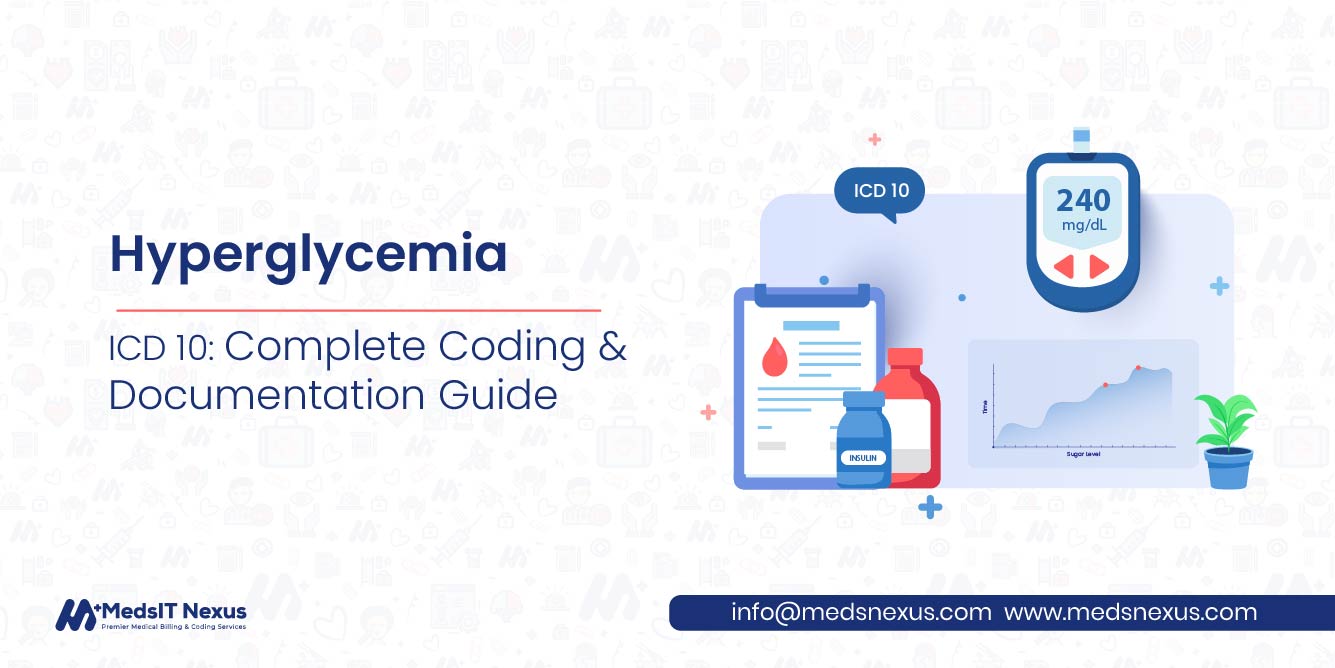
Hyperglycemia ICD 10 coding errors are among the most common causes of claim denials in endocrine-related encounters. A single missing documentation detail such as the presence of diabetes, drug-induced causes, or stress-related elevation can result in downcoding, rejected claims, or compliance risk.
Hyperglycemia ICD 10 classification doesn’t have a single code. It relies entirely on cause, clinical context, provider documentation, and associated conditions. Whether you are coding outpatient visits, emergency encounters, or inpatient admissions, code accuracy has a direct effect on the reimbursements and audit safety.
This guide provides an in-depth review of applicable codes, documentation requirements and billing implications to enable coders, clinicians and revenue cycle experts to be more accurate.
Key Takeaways
-
Use E11.65 or E10.65 when diabetes with hyperglycemia is confirmed, and R73.9 when diabetes is not documented.
-
Accurate documentation of glucose levels, HbA1c, and treatment plans improves coding precision and reimbursement outcomes.
-
MedsIT Nexus helps ensure compliant documentation, correct code selection, and smoother diabetes-related billing workflows
Understanding Hyperglycemia in ICD-10-CM
Hyperglycemia is defined as elevated blood glucose levels and is often linked to diabetes mellitus but it also occurs in secondary or drug-induced conditions. Accurate ICD-10 coding allows correct documentation of patient encounters, supports clinical decision-making, and protects revenue cycle compliance.
ICD-10 classifies hyperglycemia into primary codes for isolated high blood glucose and secondary codes when hyperglycemia occurs in the context of diabetes. Before coders assign a code like R73.9 or E11.65, they have to evaluate laboratory results, patient history and even the clinical context. Failure to code precisely may result in audits and delays in reimbursements.
Risk Factors and Clinical Significance of Hyperglycemia
Understanding patient risk factors enhances accuracy of coding. Issues of high blood sugar levels may arise because of insulin resistance, obesity, inadequate glycemic control, stress or steroid treatment. Chronic hyperglycemia predisposes patients to complications like nephropathy, neuropathy, retinopathy and cardiovascular events, making accurate documentation necessary for both clinical and billing purposes.
The coders are supposed to distinguish between transient hyperglycemia and persistent elevations. As an example, a single elevated fasting glucose can be coded as R73.9, but documented diabetes with hyperglycemia is to be coded as E11.65 or E10.65, depending on type.
Primary Hyperglycemia ICD 10 Codes Explained
R73.9 – Hyperglycemia, Unspecified
R73.9 is used for high blood glucose level without a diabetes diagnosis. This code applies when laboratory results reveal high levels of fasting glucose or abnormal levels of HbA1c, but the clinician is yet to diagnose diabetes. It captures isolated hyperglycemia, often for preventive or diagnostic evaluation.
This code is necessary in the case of acute hyperglycemia cases where monitoring or follow-up testing is required. Proper documentation of lab values and clinical history ensures compliance and supports claims.
E11.65 – Type 2 Diabetes with Hyperglycemia
E11.65 refers to Type 2 diabetes mellitus with hyperglycemia. It is used when patients have a documented diabetes diagnosis and elevated blood glucose levels that effect management. Any complications or treatment changes like alteration in insulin treatment should be included by coders to support clinical documentation.
This code allows providers to record the impact of hyperglycemia on treatment plans, including telehealth management or insulin adjustment. Supporting lab values like HbA1c >7% or fasting glucose >126 mg/dL strengthens coding accuracy.
E10.65 – Type 1 Diabetes with Hyperglycemia
E10.65 is for Type 1 diabetes patients experiencing hyperglycemia. Although less common in adults, Type 1 hyperglycemia is critical for inpatient and outpatient coding. Proper documentation of changes in insulin regimen, glucose monitoring, and acute care interventions ensures compliance.
The clinical note should be checked by coders to distinguish between the routine glucose fluctuations and persistent hyperglycemia avoiding misuse of unspecified codes.
Lab Interpretation and Clinical Thresholds
Accurate coding depends on clear lab evidence. Common thresholds include:
|
Lab Test |
Normal Range |
Hyperglycemia Indicator |
|
Fasting Glucose |
70–99 mg/dL |
≥126 mg/dL |
|
Random Glucose |
<140 mg/dL |
≥200 mg/dL |
|
HbA1c |
<5.7% |
≥6.5% |
Coders should include these values in the EMR to substantiate the hyperglycemia ICD 10 code. Documenting persistent versus transient elevations guides selection between R73.9 and diabetes-specific codes like E11.65.
When to Use R-Codes vs E-Codes
R-codes like R73.9 is used in hyperglycemia without a diabetes diagnosis. Apply them to isolated lab findings or screening encounters. E-codes (such as E10.65, E11.65) are used when diabetes is established, and hyperglycemia affects patient tratment plan.
Selecting the right code is the way to make sure claims are processed without any delay. Misuse can result in rejected insurance claims or disciplinary issues.
Comparison of Primary Hyperglycemia Codes
|
Code |
Description |
Used When |
Do Not Use When |
|
R73.9 |
Hyperglycemia, unspecified |
Hyperglycemia documented without confirmed diabetes |
Diabetes is diagnosed |
|
E11.65 |
Type 2 DM with hyperglycemia |
Type 2 diabetes + hyperglycemia documented |
Diabetes type not confirmed |
|
E10.65 |
Type 1 DM with hyperglycemia |
Type 1 diabetes + hyperglycemia documented |
No confirmed diabetes |
Hyperglycemia Without Diabetes: Coding Guidelines
Hyperglycemia may occur in patients without diabetes due to stress, acute illness, or medication effects. For example, steroid-induced hyperglycemia should be documented clearly in the chart, and R73.9 can be used for coding.
Secondary causes should be clearly noted in the EMR. The coders must not default to the diabetes code unless it has a formal diagnosis present.
Drug-Induced and Secondary Hyperglycemia
Secondary hyperglycemia can be induced by drugs such as corticosteroids, immunosuppressants, or some antipsychotics. Whenever the drug-induced cause occurs, it should be recorded as such in the clinical documentation.
Modifier codes may apply if hyperglycemia management is part of an E/M visit. Proper coding safeguards revenues and ensures treatment monitoring is recognized in billing.
Coding for Acute vs Chronic Hyperglycemia
Acute hyperglycemia normally occurs in hospitals or emergency settings and may be transient. The chronic hyperglycemia appears in diabetes or in long term endocrine illnesses. Coders are expected to distinguish such cases in order to select between unspecified hyperglycemia (R73.9) and diabetes-related codes (E10.65, E11.65).
Recording duration and lab trends will avoid misuse and assist in clinical decision-making.
Documentation Requirements for Accurate Coding

Coding accuracy depends on detailed provider documentation. Notes should include:
-
HbA1c and blood glucose values
-
Diagnosis (in case diabetes exists)
-
Medication adjustments
-
Follow-up recommendations
MedsIT Nexus ensures that all encounters associated with diabetes are documented properly, guiding coders to select the appropriate ICD-10 codes, such as E11.65 for Type 2 diabetes with hyperglycemia or R73.9 for unspecified hyperglycemia. This not only enhances coding compliance but also strengthens clinical audit readiness.
Modifier and Telehealth Considerations
Telehealth encounters can involve modifier codes for E/M services involving glucose monitoring. CPT modifier 25 should be used where hyperglycemia is treated in addition to routine diabetes management. With proper application, one can ensure insurance reimbursement and compliance.
Inpatient vs Outpatient Coding Considerations
The outpatient hyperglycemia coding is concerned with routine management and follow-up. Inpatient coding tends to be a representation of acute episodes or complications which need further documentations on the basis of severity and interventions.
In order to choose the correct code, coders have to assess whether hyperglycemia is a secondary diagnosis or part of treatment plans.
Common Coding Errors and How to Avoid Them
Common errors include:
-
Using E11.65 without confirmed Type 2 diabetes
-
Reporting R73.9 in case of chronic diabetes
-
Failure to include lab findings or drug alterations
-
Confusing hyperglycemia induced by steroids with primary diabetes
-
The inappropriate use of modifiers during telehealth
These errors should be avoided to make valid claims and secure practice income.
Tips:
-
Always review provider notes carefully
-
Use combination codes when diabetes and hyperglycemia are documented
-
Document modifiers in case of extra services provided
Billing, Reimbursement, and Risk Adjustment Impact
Proper ICD-10 coding for hyperglycemia has a direct effect on the revenue cycle management. Late reimbursement or denial of claim may be caused by misclassification or missing documentation. MedsIT Nexus helps billing teams to validate against code standards and properly file claims for both outpatient and inpatient services. With MedsIT Nexus, the healthcare organizations can confidently optimize reimbursement while staying in compliance with the ICD-10 regulations.
Clinical Scenarios & Coding Examples
-
Patient A: 58-year-old patient Type 2 diabetes, fasting glucose 180 mg/dL - E11.65.
-
Patient B: 45 years old admitted to the hospital because of steroid-induced hyperglycemia - R73.9.
-
Patient C: A 30-year-old patient with Type 1 diabetes, HbA1c 9%, who needs an insulin change - E10.65
Recording lab results, interventions, and follow-ups help in coding accuracy and reimbursement.
How MedsIT Nexus Supports Diabetes Coding Compliance
MedsIT Nexus simplify your diabetes-related ICD-10 coding and stay compliance to payer requirements. The platform provides:
-
Documentation validation, ensuring all lab outcomes, glucose readings, and medication records are reported properly.
-
Audit-ready workflows to meet payer and regulatory requirements.
-
Training and resources for the coding teams to reduce billing errors and increase efficiency.
Frequently Asked Questions
Q1. What is the ICD-10 code for hyperglycemia?
R73.9 is used for hyperglycemia without diabetes; E11.65/E10.65 are for diabetes-related hyperglycemia.
Q2. Can hyperglycemia be coded without diabetes?
Yes, R73.9 captures isolated high blood glucose in non-diabetic patients.
Q3. What is E11.65 used for?
It codes Type 2 diabetes mellitus with hyperglycemia, affecting patient management.
Q4. How is steroid-induced hyperglycemia coded?
Document the drug effect and code R73.9 unless diabetes is present.
Q5. Can hyperglycemia be reported as primary in inpatient billing?
Yes, if it drives treatment decisions and is clinically significant.
Table of Contents

Services
- Medical Audit Services
- Medical Billing Services
- Medical Credentialing Services
- Medical Coding Services
- Accounts Receivable Management
- Medical Insurance Verification
- Denial Menagement Services
Who we serve
- Private Practices
- Small Practices
- Hospitals & Healthcare
- Physicians
- Medical Equipment
- Outpatient Facilities
Get in Touch
Let's start talking about getting you credentialed